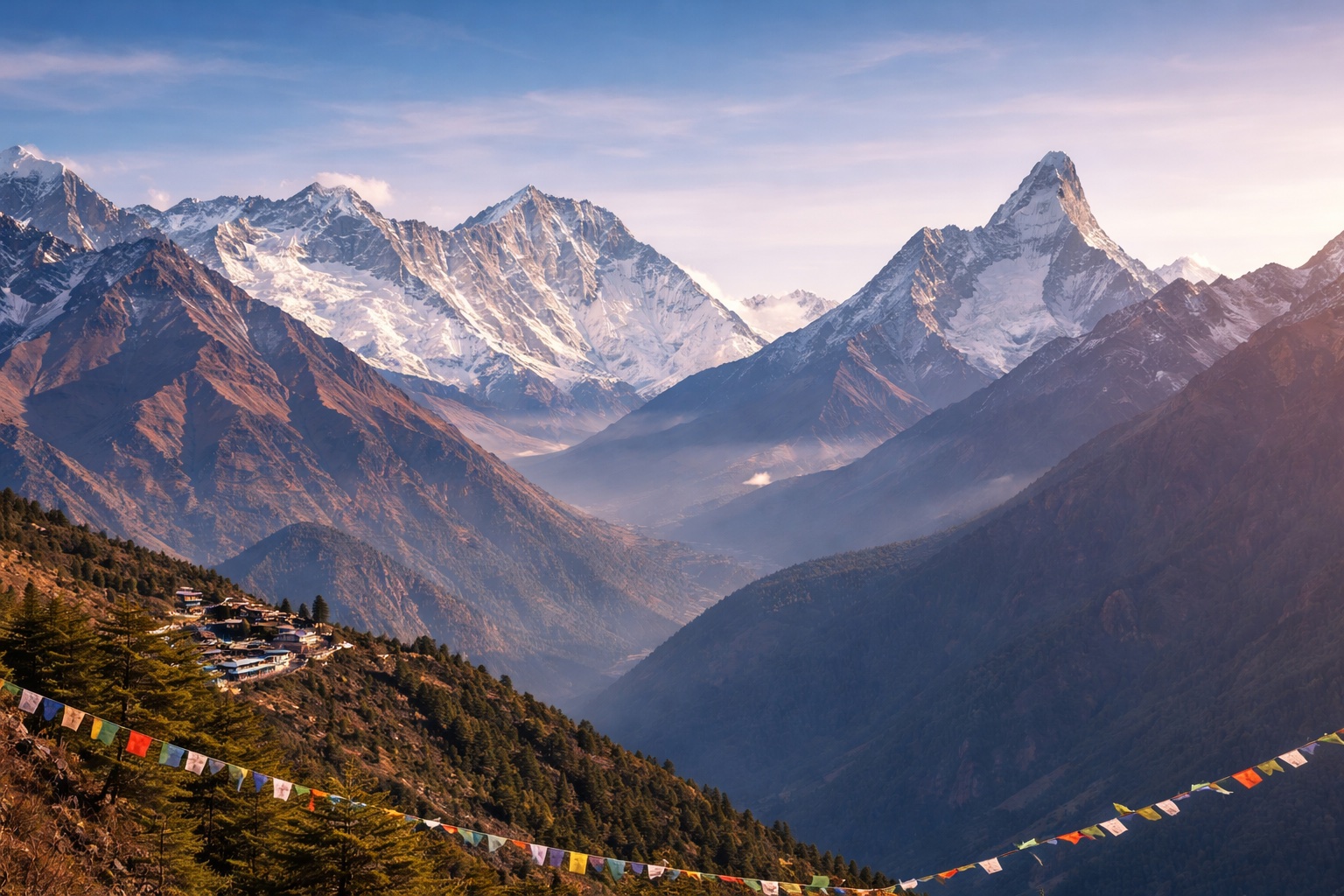
Nepal rewards visitors who arrive prepared and surprises those who do not. Not with unpleasant surprises - Nepal is one of the warmest and most welcoming countries in the world for travellers - but with the particular disorientation that comes from arriving in a place that operates on different logical premises from the ones you are used to. These 20 tips are drawn from the questions our guides answer most often and the adjustments that first-time Nepal visitors most frequently report wishing they had made earlier in their trip.
1. Nepal Time Is Not a Typo - It Is UTC +5:45
Nepal Standard Time is UTC +5:45 - the only 45-minute offset timezone in the world. When your flight schedule says 14:30 NST, your phone will show the correct local time as long as it has updated to local time on arrival. The unusual offset means that some scheduling tools round incorrectly. Check your phone on arrival.
2. Carry More USD Cash Than You Think You Need
All major trekking routes are cash-only economies. ATMs exist in Kathmandu, Pokhara, and Namche Bazaar, but the machines have daily withdrawal limits (approximately NPR 35,000-40,000, around USD 260-300) and are often out of service or out of cash during peak season. Exchange your USD to NPR in Kathmandu at the authorised money changers in Thamel - better rates than the airport or banks - and carry the cash for your entire trek before leaving the city.
3. The Altitude Will Surprise You Regardless of Your Fitness
Altitude sickness is not a function of physical fitness. Olympic athletes get altitude sickness; sedentary grandmothers do not. The determining factors are the rate of ascent and individual genetic acclimatisation capacity, neither of which correlates with cardiovascular fitness. Follow the acclimatisation schedule. Never ascend with a worsening headache. These rules save lives every year.
4. Walk Slowly - Bistari Bistari
"Bistari bistari" (slowly, slowly) is Nepal's most useful phrase for a trekker. The pace that gets most people into altitude trouble is the Western pace - fast, goal-oriented, impatient. The pace that keeps people healthy above 4,000 m is the Sherpa pace: slow, rhythmic, never breathless. Let your guide set the pace.
5. Tipping Is Standard and Matters
Tipping is standard practice in Nepal and is not considered optional by experienced Nepal travellers. Guidelines: 10-15% on restaurant bills, USD 5-15 per day for a trekking guide, USD 3-8 per day for a porter. At the end of a multi-week trek, a tip envelope shared among the entire crew is the norm and is genuinely appreciated.
6. Water Safety Is Non-Negotiable
Do not drink tap water anywhere in Nepal. Carry a Sawyer Squeeze or LifeStraw filter and use it for all water on the trail. Do not assume that tea house water is safe even when hot - contamination from the vessel is the common route of infection. The most common Nepal traveller illness is giardia, which has a 1-3 week incubation period; you may not know you got it until you are home.
7. Leave the Thamel Tourist Bubble
Thamel is useful but is an almost complete simulation of what Nepal tourists expect Nepal to look like, with little relationship to how Nepal actually is. Walk fifteen minutes in any direction and you are in working Kathmandu - the vegetable markets, the temple courtyards, the neighbourhood tea shops. Take a day to walk through Asan Bazaar, through Indra Chowk, through the lanes of Patan. The Nepal outside the tourist circuit is more interesting and more human than anything the tourist district serves.
8. Hire a Licensed Guide
Nepal requires trekkers on restricted routes to trek with a licensed guide from a registered agency. Even on non-restricted classic routes, the value of a good guide is human: a guide who knows the cultural significance of the temples, the names of the mountains, the history of the climbing routes, and the stories of the villages transforms a scenic walk into an encounter with a living culture. The difference between a good guide and a poor one is not the route - it is the quality of your understanding of what you are walking through.
9. Power Banks Are Essential on Trek
Charging on trekking routes costs NPR 200-600 per device and is not always available above Namche or Chomrong. A 20,000 mAh power bank - the largest size most airlines allow in carry-on - charges a smartphone approximately five to six times. On a 14-day EBC trek, this covers most people's charging needs without reliance on tea house power.
10. Nepal Has a Different Logical Premise - Embrace It
When a tea house owner says the next lodge is "one hour," they mean somewhere between forty minutes and three hours, depending on conditions, pace, and how they feel about the route's difficulty. When the permit office says "bring two photos," bring three. When the guidebook says the trail is well-marked, bring a guide anyway. Nepal rewards flexibility and punishes rigidity. The travellers who get the most out of Nepal are those who arrive with a plan and are happy to abandon it.
Recent Posts