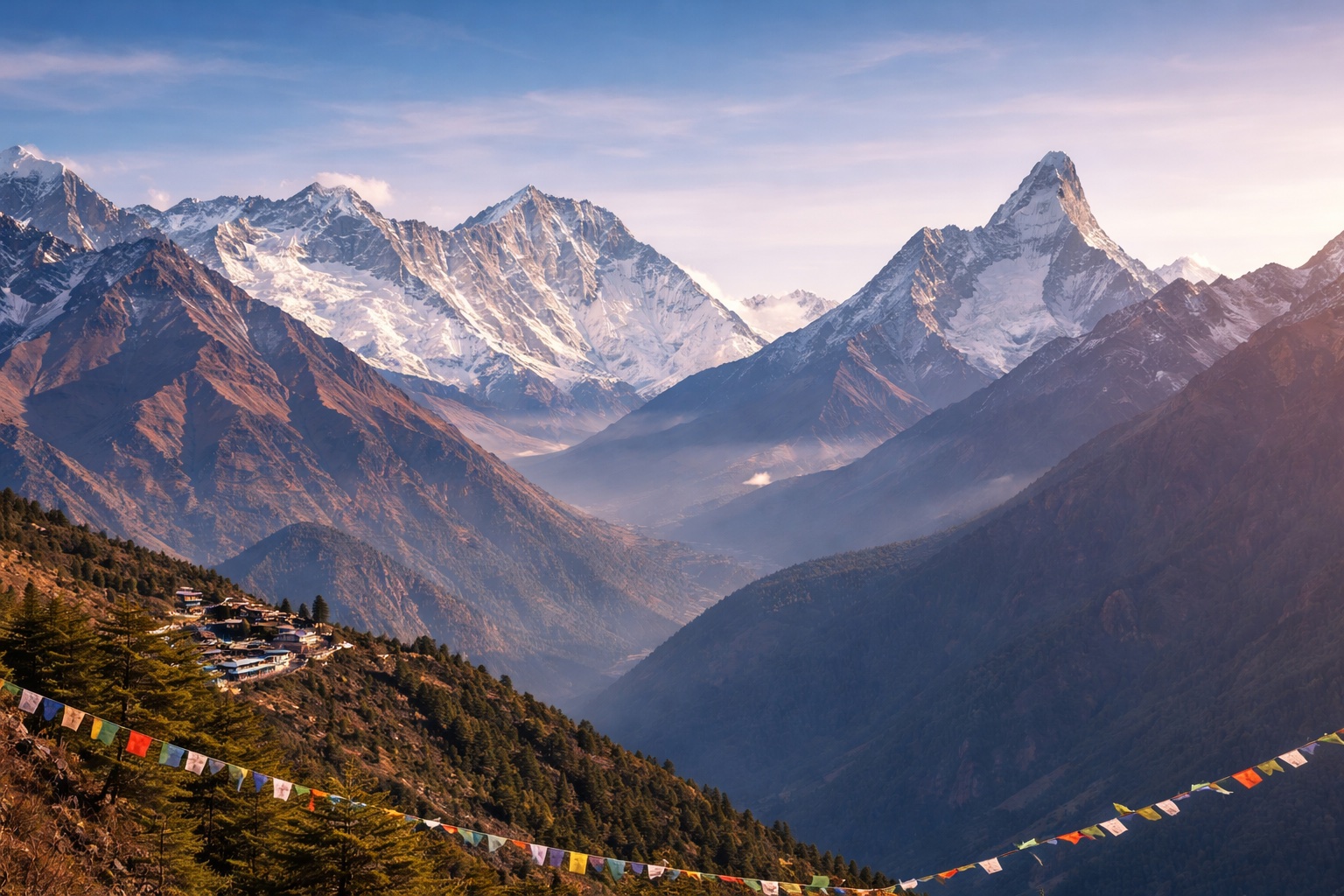
Every Nepal trekking guide says the same thing: avoid the monsoon. And for the majority of classic trekking routes - the Everest Base Camp trail, the Annapurna Circuit, the Langtang Valley - this advice is correct. The Indian Ocean monsoon, which arrives in Nepal in mid-June and dominates the weather through September, brings daily rain, cloud-obscured mountain views, leech-infested lower-elevation trails, landslide risk on steep terrain, and impassable river crossings. For routes whose primary appeal is the mountain scenery, this is a genuine problem.
But Nepal has a geographical fact that most generalised travel advice ignores: a significant portion of the country lies north of the main Himalayan chain in the rain shadow that the mountains create by blocking the northward flow of the monsoon cloud. In these regions - Upper Mustang, Upper Dolpo, the Manang and Nar Phu valleys, and parts of the Humla and Mugu districts - the monsoon arrives weakened or not at all. July in Lo Manthang (Upper Mustang's medieval capital) is dry, sunny, and warm. July on the EBC trail is wet, leech-ridden, and miserable. The difference is total.
Upper Mustang in the Monsoon - The Prime Season
Upper Mustang is, by the consensus of experienced Nepal trekkers, at its finest in the monsoon months of June through August. The Annapurna and Dhaulagiri ranges intercept the monsoon cloud before it reaches the Mustang plateau, and while Pokhara (60 km to the south) receives 500 mm of rain per month, Lo Manthang (90 km to the north) is dry, clear, and warm. The monsoon months bring three additional advantages over the autumn season: the plateau grassland greens from the limited precipitation that does reach the higher areas, the wildflowers on the plateau are in bloom, and the number of trekkers is a fraction of the October-November peak. The walled medieval city of Lo Manthang - extraordinary at any time - is genuinely uncrowded in August.
Dolpo - Sacred Lakes and Bon Culture in the Rain Shadow
Upper Dolpo also lies largely in the rain shadow and is trekked in July and August by those who know it. The Shey Phoksundo Lake - Nepal's deepest lake, with its extraordinary turquoise colour - is accessible in the monsoon months. The Dolpo monsoon experience has a specific character: mornings are typically clear with afternoon cloud development. Early departure (6:00-7:00 am) covers most of the day's terrain before the afternoon cloud arrives.
What Happens to Nepal in the Monsoon
The monsoon transforms Nepal's middle hills into some of the most lushly beautiful landscape on Earth: terraced rice paddies filling with water and reflecting the grey sky, waterfalls in every valley gorge swelling from trickles to impressive cascades, the rhododendron forests producing a second flowering of the year, and rivers swelling from placid streams to powerful, turbid flows. The agricultural heartland of Nepal - in which 80% of the population actually lives - is at its most vivid in the monsoon, and visiting Nepal's cultural heartland in July and August delivers a completely different and equally authentic Nepal experience from the October crowds.
Routes to Avoid in the Monsoon
The routes that the monsoon genuinely compromises are the high-altitude glacial approaches - EBC, the Annapurna Sanctuary, the Manaslu Circuit above Samagaon, and the Langtang valley above Syabrubesi - where sustained rain, cloud, avalanche risk, and leech-infested lower forest create conditions that are unsafe and unrewarding simultaneously. The Annapurna Circuit is particularly difficult in the monsoon: the Marsyangdi valley receives heavy precipitation, the trail is frequently muddy and leech-ridden below 3,000 m, and the famous mountain views are hidden behind cloud for the majority of the walking day.
Practical Monsoon Trekking Tips
If trekking in the monsoon on any route - including the rain shadow regions - the practical adjustments that matter: depart early each morning (before 8:00 am) to complete the day's walking before afternoon cloud and potential rain arrives; carry a fully waterproof pack cover; apply DEET insect repellent to socks and trouser legs on forest trails below 2,500 m; and ensure all electronics and sleeping gear are in waterproof dry bags inside your main pack regardless of the pack's stated water resistance.
Recent Posts