
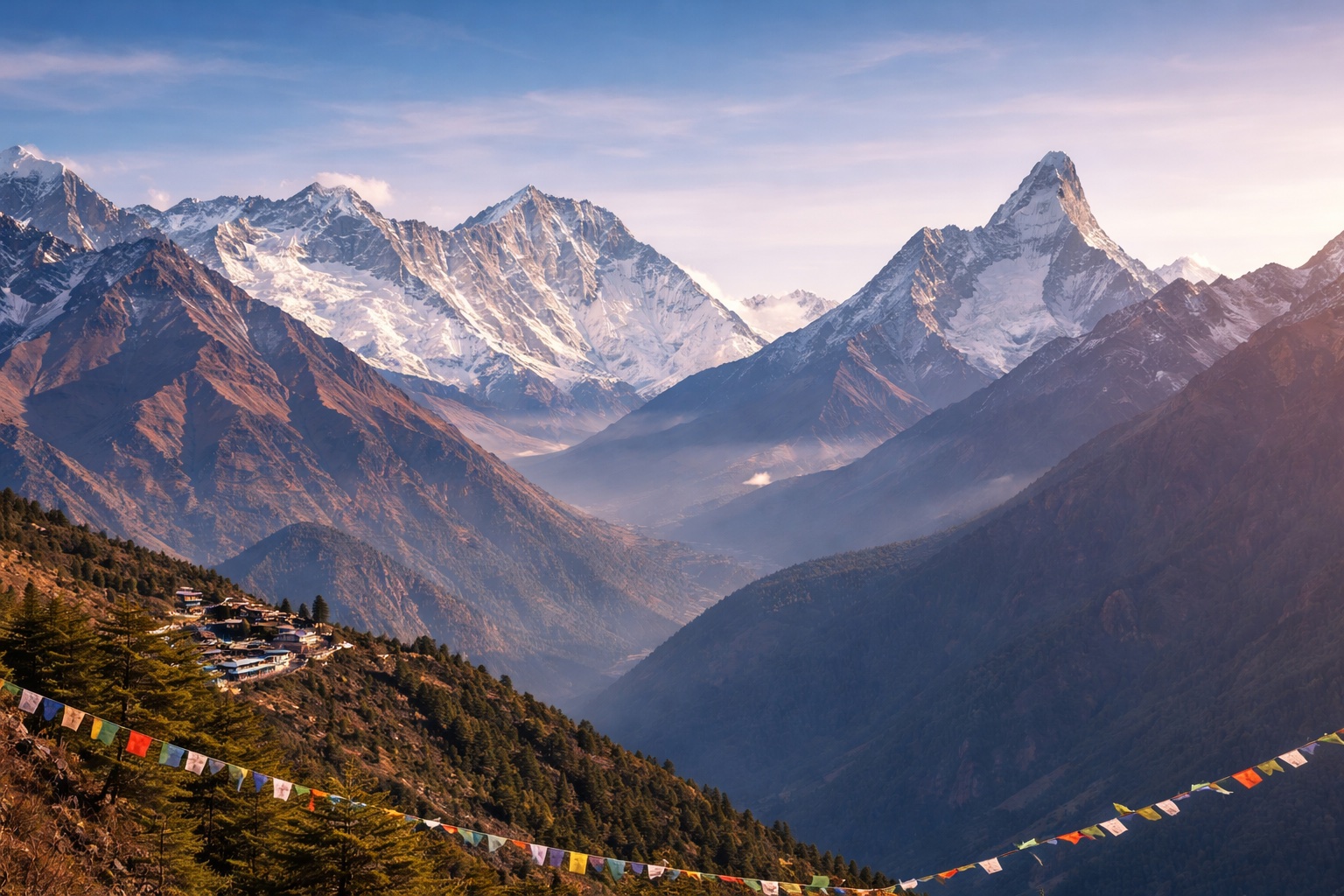
Combine the Everest Base Camp Trek with the technical summit of Lobuche East (6,119 m) — one of Nepal's most rewarding trekking peak climbs. Stand on a 6,000 m summit directly above the Khumbu Glacier with Everest, Lhotse, Nuptse, and Makalu filling the horizon.
Lobuche East (6,119 m) is the trekking peak that sits directly above the Everest Base Camp approach — rising from the lateral moraine of the Khumbu Glacier between Lobuche village (4,940 m) and the EBC trail, its east face visible from the main trail and its summit within reach of technically prepared trekkers who have walked the Khumbu approach for acclimatisation. The combination of a complete Everest Base Camp Trek with the Lobuche East summit is the most popular multi-sport Khumbu itinerary and one of the most rewarding adventure experiences in Nepal — you walk to EBC, stand at the world-famous prayer flags, and then climb above it all to a 6,000 m summit where the view encompasses everything from the Khumbu Icefall to Makalu's east ridge.
Lobuche East is classified as an NMA trekking peak — technically more demanding than Island Peak but with a different character. The northeast ridge route, the standard ascent, involves sustained glacier travel, a steep couloir (45–50 degrees), a fixed-rope section on the upper headwall, and a narrow corniced summit ridge with dramatic exposure on both sides. It is a genuine mountaineering objective — not a walk-up — and the technical training day at Base Camp is essential rather than optional for climbers without previous cramponed ice experience.
The summit of Lobuche East (6,119 m) is not the highest point available to non-expedition climbers in the Khumbu — Island Peak and Mera Peak are both higher — but its position directly above the Khumbu Glacier and adjacent to the main Everest approach gives it a summit panorama that is arguably the finest of any Nepal trekking peak. Everest (8,849 m) fills the northeast horizon with its full summit pyramid visible for the first time from a summit high enough to clear the ridges that partially obstruct it from Kala Patthar. Lhotse (8,516 m) rises to the east. Nuptse (7,861 m) stands directly above the Khumbu Icefall. Makalu (8,485 m) is clear to the southeast. Cho Oyu (8,188 m) is visible to the northwest. The Khumbu Glacier stretches below you like a map of itself. This summit view, available to relatively few people and requiring genuine effort to reach, is one of the most comprehensive high-altitude panoramas a non-expedition climber can achieve.
The Lobuche Peak climbing itinerary follows the complete EBC approach through Namche, Tengboche, Dingboche, and Lobuche, building the acclimatisation that the summit demands, before establishing a Base Camp below the northeast ridge and making the summit attempt. The acclimatisation profile is the best of any Nepal trekking peak climb — ten days of approach walking at progressively higher altitudes creates a physiological readiness for 6,000 m that dramatically improves both summit success rate and safety. Most failed Lobuche attempts result from insufficient acclimatisation — our 16-day itinerary eliminates this as a factor.
Island Peak (6,189 m) is slightly higher, in the Imja valley rather than directly on the EBC route, and is the more popular choice for first-time Himalayan technical climbers. Lobuche East (6,119 m) is slightly lower but technically more demanding — the fixed-rope section is longer and the summit ridge has more sustained exposure. The Lobuche summit panorama is, in the assessment of most guides who have summited both, superior to Island Peak's — primarily because of Lobuche's direct line of sight to Everest and the full Khumbu glacier perspective. If you want a technically more demanding climb with the finest summit view in the Khumbu, choose Lobuche. If you want a well-established introductory trekking peak with a clear success pathway for first-time climbers, Island Peak is the better choice.
Lobuche East requires an NMA climbing permit (USD 250 per person spring/autumn). The climbing route requires: crampons, ice axe, climbing harness, helmet, jumar, and gaiters. Our package includes crampons, harness, and helmet rental; a technical training day at Base Camp; and NMA-certified high-altitude climbing guides with multiple Lobuche summits.
Lobuche East (6,119 m) is technically more demanding than Island Peak (6,189 m). Both require crampons, ice axe, and fixed rope technique. Lobuche's northeast ridge has a longer fixed-rope section, a steeper upper headwall, and a more exposed summit ridge with cornices. The summit view from Lobuche is superior to Island Peak's — direct line of sight to Everest and the full Khumbu glacier. Island Peak is the better choice for a genuine first technical Himalayan summit. Lobuche is appropriate for climbers who have already summited Island Peak or have equivalent alpine experience.
Our Lobuche East success rate is 80–88% in spring and 75–83% in autumn. The main factors affecting success: acclimatisation quality (our 10-day EBC approach is among the best preparation profiles available for any 6,000 m peak), weather on summit day, and individual fitness. Most failed attempts result from weather rather than technical difficulty.
Yes — our "Double Summit" itinerary combines both peaks on a 20-day expedition: Island Peak via the Imja valley (Day 12–14 of the standard approach), then Lobuche East (Day 16–18). This is for climbers with strong technical background and excellent fitness. Contact us for the combined itinerary.
Full-frame crampons, ice axe, climbing harness, helmet, jumar, carabiners, gaiters, and trekking poles. We rent crampons, harness, and helmet for clients without their own gear. Bring your own high-altitude sleeping bag (rated -25°C minimum), base layers, and insulated jacket. A detailed gear list is provided at booking.
The Nepal Mountaineering Association climbing permit for Lobuche East costs USD 250 per person for autumn and spring seasons. This is included in our package price, along with the Sagarmatha National Park permit and TIMS Card. Our team handles all permit applications before the trek begins.