
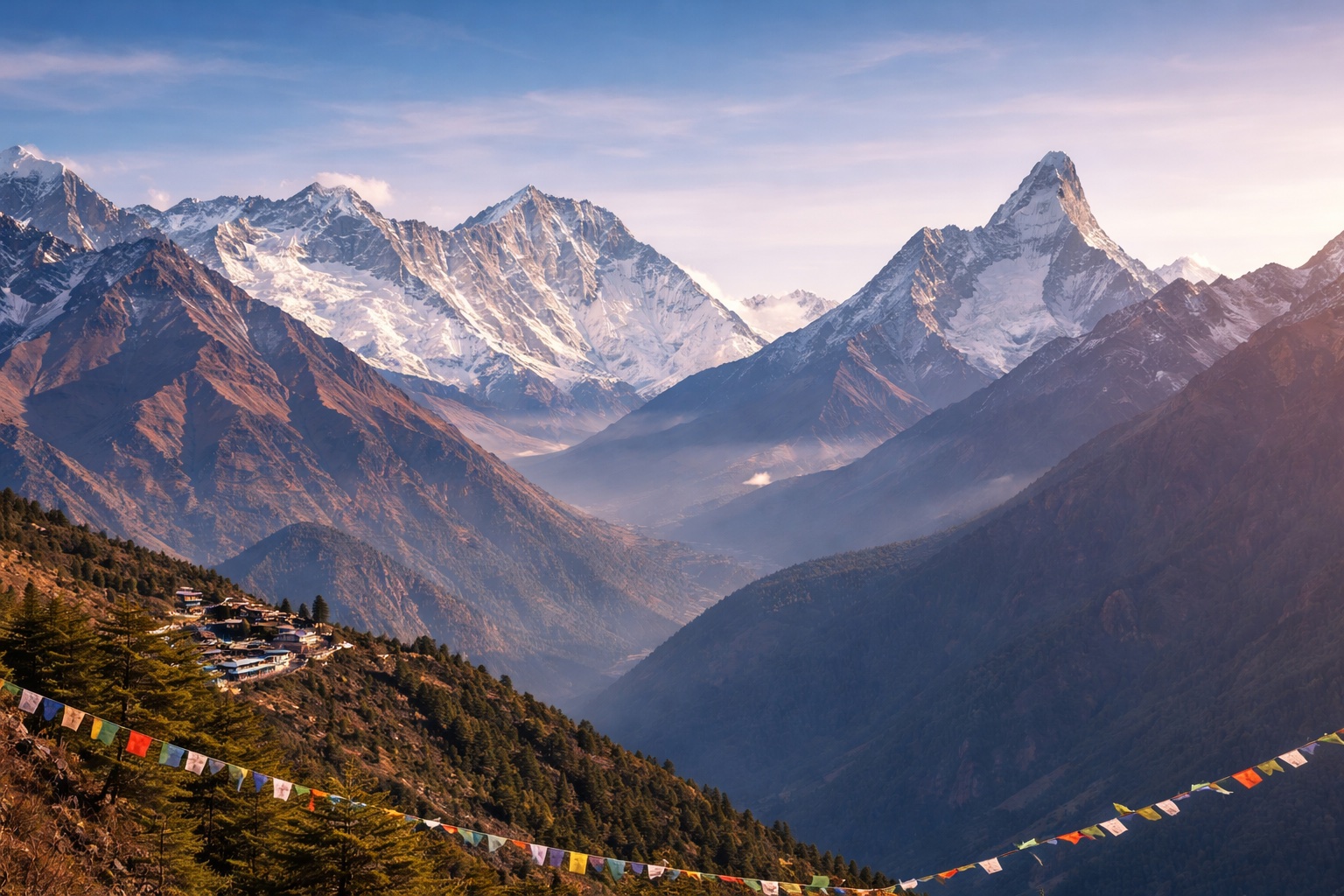
Yala Peak (5,520 m) in the Langtang valley is Nepal's most accessible genuine Himalayan summit — the ideal first technical climb for trekkers with no prior mountaineering experience. A 14-day package combining the full Langtang Valley Trek with a summit ascent of a peak that requires basic crampons and ice axe skills, not prior climbing experience, and rewards with a close view of Langtang Lirung (7,227 m), Dorje Lakpa (6,966 m), and the entire Langtang range from a height that very few trekkers ever achieve.
Yala Peak (5,520 m) in the Langtang valley is, by the assessment of experienced trekking guides, the most accessible genuine summit in Nepal — a mountain that requires real effort, real altitude, and real equipment, but does not demand the technical climbing skills, the lengthy expedition timeline, or the financial commitment of the higher and more complex trekking peaks. For travellers who have completed a Himalayan trek and want to take the step from trekking to standing on an actual summit — to know what it feels like to reach the top of something that is genuinely above 5,000 metres, surrounded by the Himalayan giants — Yala Peak is the natural starting point.
The Langtang valley — Yala Peak's approach corridor — is one of Nepal's great trekking destinations: a high valley north of Kathmandu bordered by Tibet, with a Tamang Buddhist culture distinct from the Sherpa communities of the Khumbu, a dramatic landscape of yak pastures and glacial rivers, and close views of the Langtang range that include Langtang Lirung (7,227 m), the highest peak in the valley wall, and Dorje Lakpa (6,966 m) on the eastern ridge. The approach to Yala Peak follows the main Langtang valley trail as far as Kyanjin Gompa, then ascends directly to the peak from the monastery village — the most convenient high-camp arrangement of any Nepal trekking peak, with a comfortable tea house effectively serving as the lower base before the high-camp night.
The Yala Peak ascent begins from Kyanjin Gompa (3,870 m) — the Langtang valley's main village and tea house settlement, reachable in 5 days from Kathmandu without any prior trekking fitness beyond what is normal for a reasonably active person. From Kyanjin, the standard route ascends the valley to the high camp at approximately 5,100 m, then climbs the final 420 metres to the summit on slopes that average 35–40 degrees — steeper than a hiking trail but nowhere near the 50–55-degree sections of Island Peak or Pisang Peak. Crampons and an ice axe are required and must be used correctly, but the technique required is basic self-arrest and steady front-foot placement rather than the more advanced climbing skills the higher peaks demand.
This accessibility is genuine: Yala Peak is one of very few places in Nepal where a trekker who has never used crampons can attend a 2-hour skills session at Kyanjin Gompa, sleep at the high camp, and safely stand on a 5,520 m summit the following morning. We are honest about the physical demands — the altitude and the cold are real, and both require respect — but the technical barrier is low enough that the mountain is appropriate for well-prepared trekkers without prior climbing experience.
Kyanjin Gompa (3,870 m) is one of Nepal's finest mountain villages — a collection of traditional stone houses, a working Buddhist gompa, a famous yak-milk cheese factory, and a research station for the glaciological study of the Langtang glacier. The village sits at the base of the Langtang range with the Kyanjin Ri viewpoint hill (4,773 m) rising directly above and Langtang Lirung's massive north face framing the valley head. From Kyanjin, the pre-dawn hike to the Kyanjin Ri summit — usually done on the Langtang Valley Trek — is itself one of Nepal's great sunrise experiences: the Himalayan chain from Ganesh Himal to Dorje Lakpa to Manaslu spread across 180 degrees of horizon from 4,773 m.
The cheese factory at Kyanjin has been producing yak-milk cheese since the 1950s, introduced by Swiss development workers who recognised the potential for a yak pastoralism industry in the high valley. Kyanjin cheese is now sold in Kathmandu specialty shops and is, by the assessment of most travellers who have tried it, the finest hard cheese made in Nepal — the mountain air and the diet of the high-altitude yaks producing a robust, slightly tangy cheese with an entirely distinct character from European equivalents. Visiting the cheese factory and buying a wheel to bring home is one of the Langtang valley's minor but genuine pleasures.
The Langtang valley suffered catastrophic losses in the April 2015 earthquake. The earthquake triggered a massive avalanche from Langtang Lirung's north face that destroyed the main Langtang village entirely — approximately 250 residents and trekkers were killed. Kyanjin Gompa, 7 km further up the valley, survived with moderate damage. In the years since, the valley has been substantially rebuilt — the new Langtang village rising directly adjacent to the ruins of the old one, with the ruins preserved as a memorial site. Trekking in the Langtang valley today is an act of solidarity with communities that have rebuilt from one of Nepal's worst natural disasters, and the hospitality of the Tamang people who chose to return and rebuild is among the most moving aspects of the Langtang experience.
Yes — and this is the honest answer, not a marketing claim. Yala Peak at 5,520 m is the one Himalayan summit where well-prepared trekkers with zero technical background can reasonably aim. The key word is "well-prepared": you need good cardiovascular fitness, the ability to walk 5–6 hours a day on steep uphill terrain for consecutive days, and the willingness to learn crampon and ice axe basics at Kyanjin Gompa before the summit attempt. Our guides teach the required skills in a 2-hour session that covers all terrain encountered on the Yala route. What you do not need is prior rock climbing, prior glacier experience, or any technical certification. The slope angles on Yala (35–40 degrees maximum) are demanding but manageable for a fit, cautious person following their guide's instructions carefully.
Yala (5,520 m) is the easiest and lowest of Nepal's popular trekking peaks: shorter approach, lower elevation, less technical terrain, and the most accessible introduction to Himalayan climbing. Mera Peak (6,476 m) is the next step up — significantly higher, longer approach through the remote Hinku valley, and a bigger altitude challenge. Island Peak (6,189 m) is the most technically demanding of the three, with the 50–55-degree headwall section requiring genuine ice-climbing confidence. The typical progression for a trekker moving into Himalayan climbing is Yala → Mera → Island Peak → higher objectives — each step building the altitude experience and technical skills for the next.
Yala Peak requires a Nepal Mountaineering Association trekking peak permit (USD 250 per person per season), a Langtang National Park entry permit (NPR 3,000), and a TIMS card (NPR 2,000 for organised groups). All are included in our package price. No restricted area permit is required.
Langtang is the closest major Himalayan trekking destination to Kathmandu — approximately 7 hours by road to the trailhead at Syabrubesi. No domestic flight is required. This makes it the most time-efficient Himalayan trekking and climbing destination for visitors with limited time, and the easiest to access in adverse weather when domestic flights are grounded. The drive itself is scenic — the Trishuli river gorge and the Tamang village corridor north of Dhunche are beautiful in their own right.
The April 25, 2015 earthquake triggered a catastrophic avalanche and rock-ice debris flow from Langtang Lirung's north face that destroyed the main Langtang village almost completely. Approximately 250 people were killed — residents and trekkers. Kyanjin Gompa, 7 km further up the valley, was damaged but survived. The village has been rebuilt by its remaining residents and by new families who moved in. The ruins of the old village are preserved as a memorial site and are visited by most trekkers as a reminder of what the community lost and what it rebuilt. The Langtang valley today has a quiet resilience — the hospitality is unchanged, the mountains are unchanged, and the people who chose to return have given the valley a particular warmth toward visitors who come in solidarity as well as for the mountains.
Yes — and this is one of the best Langtang region combination itineraries. The Gosaikunda lakes (4,380 m) are one of Nepal's most sacred pilgrimage sites and the source of the Trishuli river. A combined Langtang Valley — Yala Peak — Gosaikunda circuit adds 3–4 days and crosses the Laurebina La (4,609 m) to connect the Kyanjin Gompa area with Gosaikunda and then down to Dhunche or Sundarijal near Kathmandu. The full circuit — approximately 17–18 days — is one of the most complete experiences in the Langtang region, combining cultural immersion, glacial mountain landscapes, sacred lakes, and a genuine summit.