
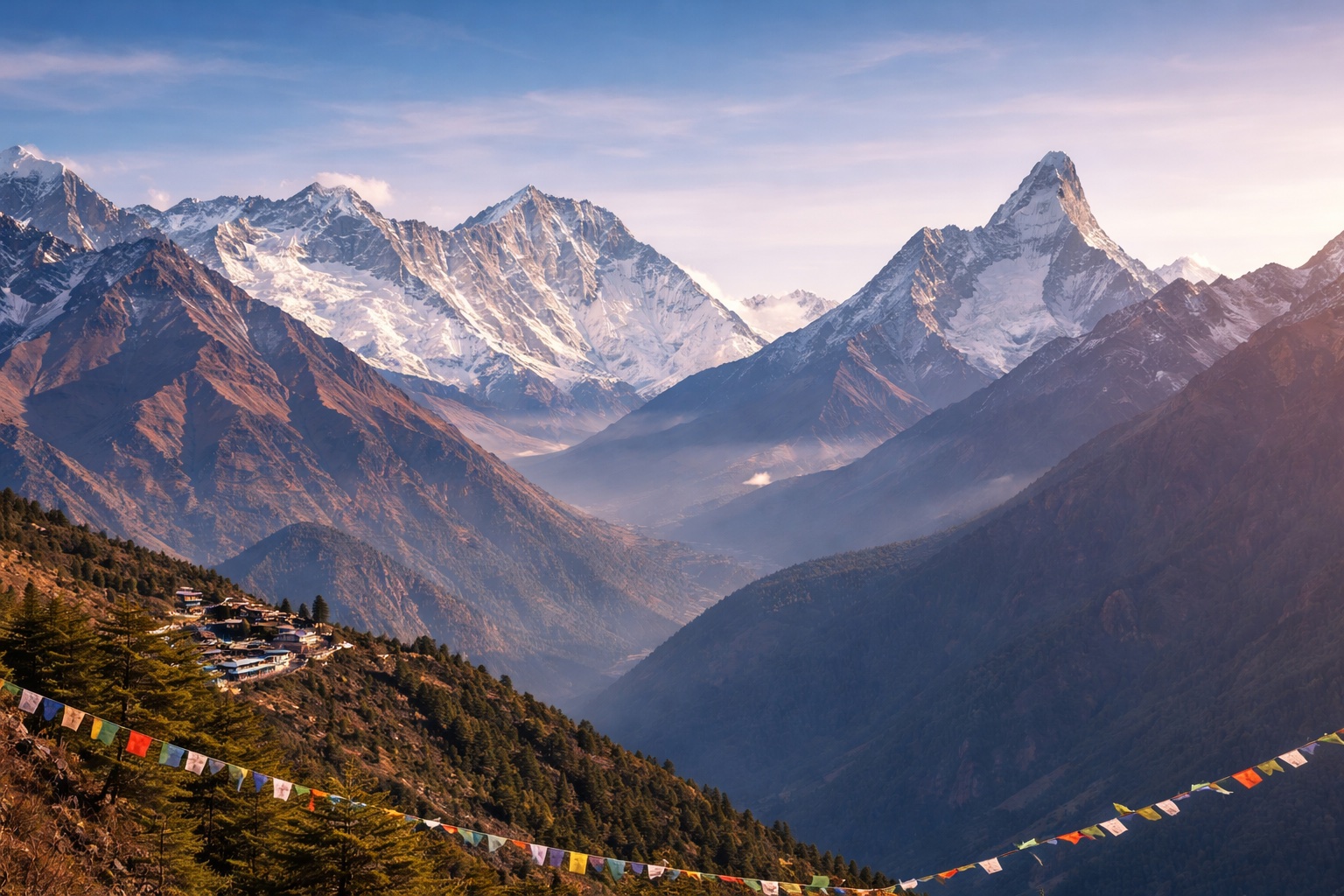
Remote & Restricted Area Treks - Nepal's Ultimate Wilderness Routes
Nepal's restricted area trekking routes represent the frontier of Himalayan adventure — regions so culturally sensitive, ecologically significant, or strategically positioned that the Nepal government limits visitor access through special permit systems. These routes require licensed guides (independent trekking is not permitted), a minimum group of two trekkers, and permits that cost significantly more than standard trekking fees. In exchange, they deliver something that the popular routes simply cannot offer: genuine solitude in some of the world's most spectacular mountain environments, cultural encounters unmediated by the compromises that mass tourism inevitably produces, and the specific quality of experience that comes from walking trails that most people will never walk.
Why Choose a Restricted Area Trek?
The question deserves a direct answer, particularly given the significantly higher permit costs. The Manaslu Circuit's restricted area permit adds USD 100 to the trek's cost. Upper Mustang's adds USD 500. Kanchenjunga's adds USD 10 per day. These are real costs that reflect deliberate policy choices by the Nepal government to protect culturally and ecologically sensitive environments by limiting the number of visitors who access them.
What those costs buy is difficult to quantify in a brochure but immediately apparent on the trail. On the Manaslu Circuit, you may walk the Buri Gandaki gorge for an entire day without passing another trekking party. In Upper Mustang's ochre desert, the medieval walled city of Lo Manthang is yours to explore at a pace that the popular routes — where tea house queues form in October and sunrise viewpoints are crowded — cannot permit. At Kanchenjunga's Pangpema Base Camp, the world's third highest mountain fills your entire sky without another tourist in sight. The restricted area permit system works as designed: the places it protects are genuinely more intact, more authentic, and more moving for having fewer visitors.
Manaslu Circuit Trek
The Manaslu Circuit is Nepal's most rewarding circuit trek for experienced trekkers seeking genuine wilderness and cultural depth. Circling Manaslu (8,163 m) — the world's eighth highest mountain — over fourteen days, the route traverses the Buri Gandaki River's dramatic gorge, passes through Tibetan Buddhist communities in the Nubri Valley that preserve cultural practices centuries unchanged, and culminates in the crossing of Larkya La Pass (5,106 m) — one of Nepal's most dramatic and remote high-pass crossings.
The Nubri valley's Tibetan Buddhist culture is the circuit's great human treasure. The physical isolation of the valley — accessible only on foot, a week's walk from the nearest road — meant that outside influence arrived later and changed things less thoroughly than in the Everest and Annapurna regions. Ancient gompas with active monk communities, multi-kilometre mani stone walls carved with sacred mantras, traditional dress maintained in daily life rather than performed for visitors, and the particular spiritual weight of a community that has found meaning in the shadow of an 8,000-metre mountain for generations — these create an immersive cultural experience that the popular routes increasingly struggle to deliver.
The Serang Gompa (Pungyen Gompa), perched dramatically on a cliff above Lho village, is one of Nepal's oldest functioning monasteries and a landmark of Nubri's Buddhist heritage. The sacred glacial lake of Birendra Tal — turquoise water below the Manaslu Glacier with the peak towering above — is among Nepal's most beautiful alpine lakes and the reward for the acclimatisation hike from Samagaon.
Upper Mustang Trek
Upper Mustang is unique among Nepal's trekking regions in multiple respects. It is the only major route fully accessible during the monsoon season (June-September), protected by the Himalayan rain shadow that keeps its annual rainfall below 300 mm even as the rest of Nepal floods. It is the site of Nepal's only surviving medieval kingdom — Lo Manthang, founded in 1380 CE, a fully enclosed walled city whose single wooden gate, four major monasteries with original 15th-century murals, and four-storey royal palace have remained substantially unchanged for six centuries. And it contains the most extraordinary concentration of man-made caves in the Himalayan range — thousands of cliff-carved chambers up to a thousand years old, some containing ancient Buddhist shrines with exceptional frescoes.
The landscape itself is immediately arresting. Upper Mustang is a Tibetan desert landscape — ochre and crimson eroded badlands, wind-sculpted ridges and canyons, flat-topped mesas, the deep blue of a rain-shadow sky — that feels geologically and culturally connected to Tibet because it essentially is Tibet, preserved within Nepal's political border by the accident of treaty geography. Walking from the lush lower valleys into this desert world over two days creates one of trekking's great landscape transitions.
The Tiji Festival, held in Lo Manthang each May on dates determined by the Tibetan lunar calendar, is one of the Himalayas' most extraordinary cultural events — masked dances performed by the monastery's monks, with the King of Lo participating, re-enacting a mythological battle that has been performed in this city for centuries. Timing your Upper Mustang trek for Tiji transforms an already extraordinary journey into something genuinely once-in-a-lifetime.
Kanchenjunga Base Camp Trek
The Kanchenjunga Base Camp Trek is Nepal's most remote major trekking route and, for the experienced adventurer, its most rewarding. Kanchenjunga (8,586 m) — the world's third highest mountain — sits in far eastern Nepal near the Sikkim border, four days' journey from Kathmandu by road and flight. The mountain is sacred to the Sikkimese people, who successfully petitioned for its summit to remain technically unclimbed (teams traditionally stop just short of the true top). This sacred status is palpable at both base camps — there is a quality of presence and reverence at Pangpema and Oktang that the heavily visited Khumbu and Annapurna base camps cannot replicate.
The approach through far eastern Nepal is biologically extraordinary. The subtropical forests of the Tamur River valley support more than 300 orchid species, rhododendron forests of unmatched diversity (spring blooms here are considered among the finest in Nepal), red panda populations in the bamboo groves, and bird species found nowhere else in the country. The human communities along the route — Rai, Limbu, and Sherpa villages each maintaining distinct cultural traditions — provide a cultural richness rarely encountered on the more homogeneous routes of the Everest and Annapurna regions.
The route visits both North Base Camp at Pangpema (5,143 m) — where Kanchenjunga's north face fills the entire sky — and South Base Camp at Oktang (4,730 m), providing two completely different perspectives on the mountain's scale and geology over a twenty-day journey. This double base camp experience is unique among Nepal's major trekking routes and justifies the logistical investment required to reach this remote corner of the Himalayas.
Permits and Practical Information
Manaslu Circuit permits: Restricted Area Permit USD 100 (first week) + Manaslu Conservation Area NPR 3,000 + ACAP NPR 3,000 + TIMS NPR 2,000. Package from USD 1,450 for 14 days. Upper Mustang permits: Restricted Area Permit USD 500 (first 10 days) + ACAP NPR 3,000 + TIMS NPR 2,000. Package from USD 2,800 for 12 days. Kanchenjunga permits: Restricted Area Permit USD 10/day + KCA NPR 3,000 + TIMS NPR 2,000. Package from USD 2,800 for 20 days. All packages include licensed guide (mandatory), porter, accommodation, and full-board meals.
The Permit System: What It Protects
Nepal's restricted area permit system was designed with a clear purpose: to protect environments and cultures that mass trekking tourism would damage. The evidence suggests it works. Upper Mustang's 15th-century monastery murals are in better condition than comparable sites in more-visited regions. The Nubri valley's traditional culture remains more intact than the Khumbu's Sherpa culture, which has undergone rapid commercialisation in response to decades of intensive tourism. Kanchenjunga's forests are more biodiverse and its wildlife more visible than equivalent forests on the Annapurna and Everest trails. The permit costs are real. What they protect is equally real.
Guide Requirements in Restricted Areas
A licensed guide is legally mandatory on all restricted area routes, enforced at permit checkpoints. This requirement exists because the cultural sensitivity of these environments requires informed navigation, the remoteness means emergency response depends on guides with established local relationships, and the permit system's ability to control visitor numbers depends on accountability through registered guide and agency structures. Our restricted area guides have extensive specific experience on the routes they lead, typically multiple complete circuits that have built the local knowledge and community relationships that transform these treks into genuine cultural experiences.
Book a Remote Nepal Trek
Our restricted area trek packages include all mandatory permits, NTB-licensed guides with specific route experience, porter service, full-board accommodation, and comprehensive emergency equipment. Manaslu Circuit from USD 1,450 (14 days). Upper Mustang from USD 2,800 (12 days). Kanchenjunga from USD 2,800 (20 days). Book well in advance for spring and autumn seasons as restricted area permits sell out.
The experience of walking trails that the vast majority of the world's trekkers will never walk, in landscapes that the permit system has deliberately kept intimate and uncompromised, is one of those things that cannot be fully understood before it is experienced. Every trekker who has completed the Manaslu Circuit, walked through Lo Manthang's medieval gate, or stood at Kanchenjunga's Pangpema base camp reports the same thing: the investment in permits, preparation, and time was repaid many times over by the quality and depth of what those protected environments deliver.