
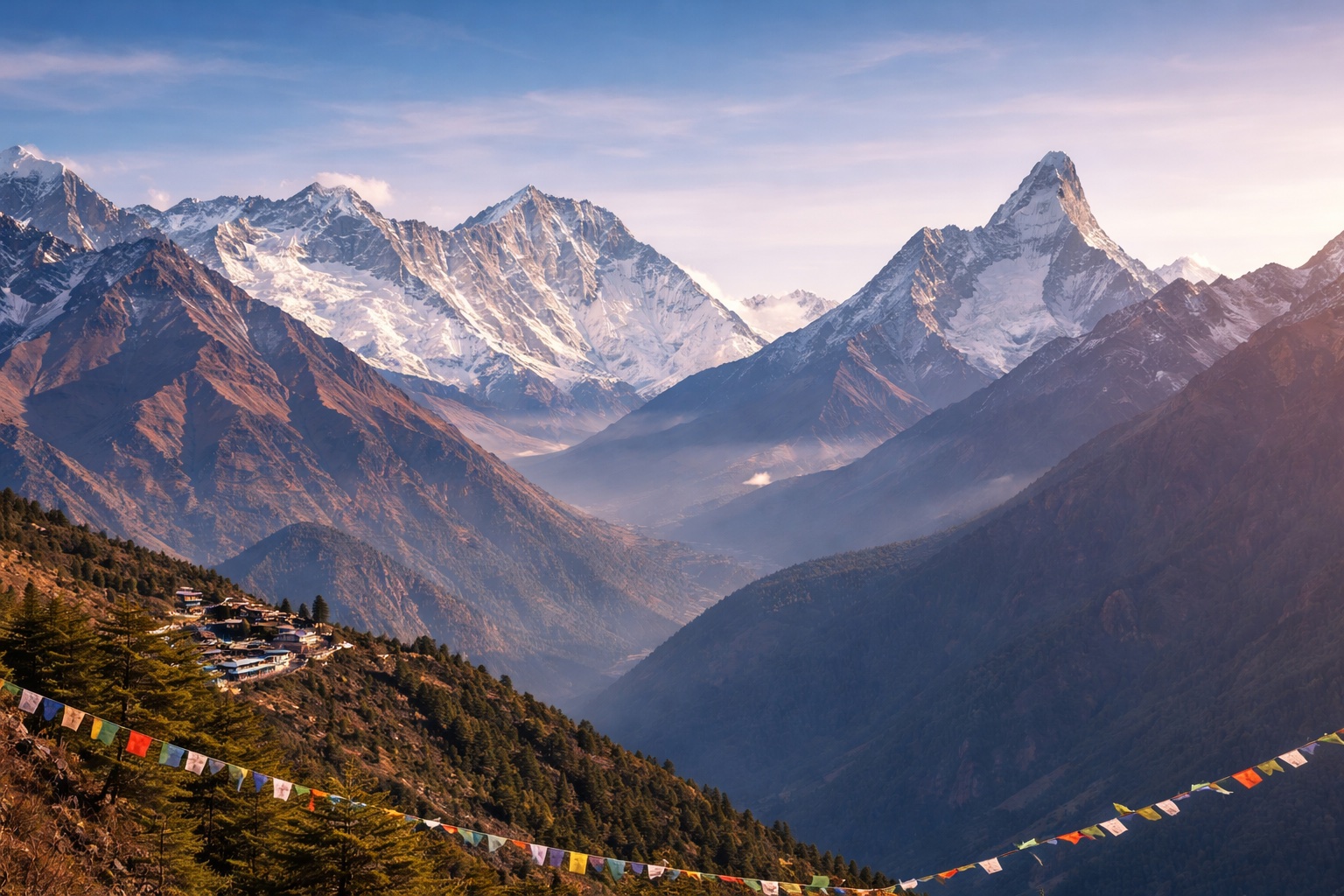
Enter the Nar and Phu valleys — two hidden Tibetan Buddhist communities closed to outsiders until 2003, tucked behind the Annapurna massif on the Tibetan border. Cross the Kang La Pass (5,416 m) between the two valleys for the most dramatic high-pass traverse in the Annapurna region.
The Nar Phu Valley Trek is the Annapurna region's answer to Tsum Valley — a restricted-access route into two remote Tibetan-Buddhist communities (Nar and Phu) tucked behind the Annapurna massif in the upper Manang district, completely hidden from the standard Annapurna Circuit trail by the towering walls of the Annapurna and Damodar mountain groups. The valleys were closed to foreigners until 2003 and remain restricted today — accessible only to trekkers holding a special restricted area permit, travelling in groups of minimum two with a licensed guide. In a good year, fewer than 2,000 trekkers enter Nar Phu. On the standard Annapurna Circuit (whose route passes the Nar Phu junction at Koto), 50,000 trekkers per year walk straight past without knowing what lies two days above them.
What lies above is a landscape and culture that most visitors describe as the most compelling they have encountered in Nepal trekking. Phu village (4,080 m) is one of the highest permanently inhabited settlements in Nepal — a cluster of stone houses and ancient gompas surrounded by a mountain panorama that includes Himlung Himal (7,126 m), Kang Guru (6,981 m), and the north faces of the Annapurna massif visible across the Manang valley. The village has a population of approximately 200 Tibetan-origin people who maintain a culture, a dialect of Tibetan, and a system of communal land management that scholars of Himalayan culture describe as among the most archaic surviving in Nepal. Nar village (4,110 m), reached by crossing the Kang La Pass (5,416 m), is equally remote and culturally intact — the two villages form a cultural pair that has maintained mutual dependence through trade across the pass for centuries.
The Kang La Pass (5,416 m) between Phu and Nar is the physical and experiential centrepiece of the trek — a 5,000 m+ crossing through genuine high-altitude terrain with the Damodar Himal rising directly above and the Annapurna massif visible to the south. The ascent from Phu involves a full day of high-altitude walking on glacial moraine and permanent snow; the crossing itself involves crampons on hard snow in early spring and a section of fixed rope on the descent to Nar. It is significantly more demanding than the standard high passes of the Annapurna Circuit (Thorong La at 5,416 m) — colder, less trafficked, more exposed, and requiring a higher base fitness. But the solitude of the crossing — no other trekkers, no tea house, no footprints in the snow — and the views from the pass, which encompass the entire north face of the Annapurna and Pisang groups, make it the finest high-pass experience in the Annapurna region.
The most memorable aspects of the Nar Phu Trek are consistently described by trekkers as not the landscape — extraordinary as it is — but the human encounters. The communities of Phu and Nar have had so little contact with the outside world that the curiosity runs both ways: visitors are as much objects of fascination to the villagers as the villagers are to them. Village gompa monks invite trekking groups for butter tea and tsampa (roasted barley flour — the staple diet of the high Tibetan plateau). Elderly villagers who have never left the valley describe, through your guide's translation, a mental geography of their world that is entirely contained within the visible mountain walls. Children who have seen photographs of lowland cities but never been to one ask questions about the world below with the directness of people who have never been taught to be incurious. These encounters — which home-stay accommodation in both villages makes possible — are irreplaceable and, for most trekkers, the most significant human experience of their Nepal travels.
The trek begins at Koto (2,640 m) on the Annapurna Circuit — a small village three hours above Chame that is the entry point for the Nar Phu restricted area. The full itinerary follows the Nar Khola river valley north to Phu, crosses the Kang La to Nar, and returns to the Annapurna Circuit via the lower Meta and Koto junction. This allows the Nar Phu circuit to be done as a standalone trek beginning and ending at the Annapurna Circuit, or as a dramatic extension to a full Annapurna Circuit traverse — the combination creating one of the finest 20-day trekking itineraries in Nepal.
Nar Phu requires a Restricted Area Permit (USD 90 per person per week for the first 4 weeks in the high season) plus ACAP (Annapurna Conservation Area Permit) and TIMS Card. Minimum 2 trekkers, licensed guide mandatory. All permits arranged and included in our package.
The standard Annapurna Circuit passes Koto — the Nar Phu junction — without entering the restricted valleys above. Nar and Phu are completely invisible from the main circuit and completely unknown to the 50,000 trekkers who pass by each year. Inside the restricted zone: authentic Tibetan Buddhist culture unchanged by tourism, villages with home-stay hospitality, a dramatic pass crossing at 5,416 m with crampons, and mountain views (Himlung Himal's north face, the Damodar Himal) that are unavailable from any other standard trekking route. The combination makes Nar Phu the most significant upgrade available to any trekker who has already done the Annapurna Circuit.
Three permits: (1) Restricted Area Permit — USD 90 per person per week; (2) ACAP — USD 30; (3) TIMS — USD 20. Minimum 2 trekkers, licensed guide mandatory. All are arranged and included in our package.
The Kang La (5,416 m) requires crampons on the approach to the pass in early spring and autumn — we provide these. There is a fixed rope section on the descent to Nar which our guide manages. No previous technical climbing experience is required, but high-altitude trekking experience (above 4,500 m ideally) and strong physical fitness are essential. The crossing day is 8–10 hours of sustained effort at altitude.
Yes — the natural combination is to enter Nar Phu from Koto going north (day 2–9 of our itinerary), emerge at Ngawal joining the main circuit, then continue over the Thorong La and down to Jomsom and Tatopani on the standard circuit. This creates a 20–22 day itinerary that is, in our guides' assessment, the finest complete Nepal trekking experience currently available. Contact us for the combined circuit itinerary.
October–November (best visibility, most stable pass conditions) and March–May (pre-monsoon, snow on the Kang La but manageable with crampons). The Kang La is impassable in mid-winter (December–February) — deep snow and extreme cold. Monsoon (June–September) is possible but the approach gorge is prone to rockfall.