
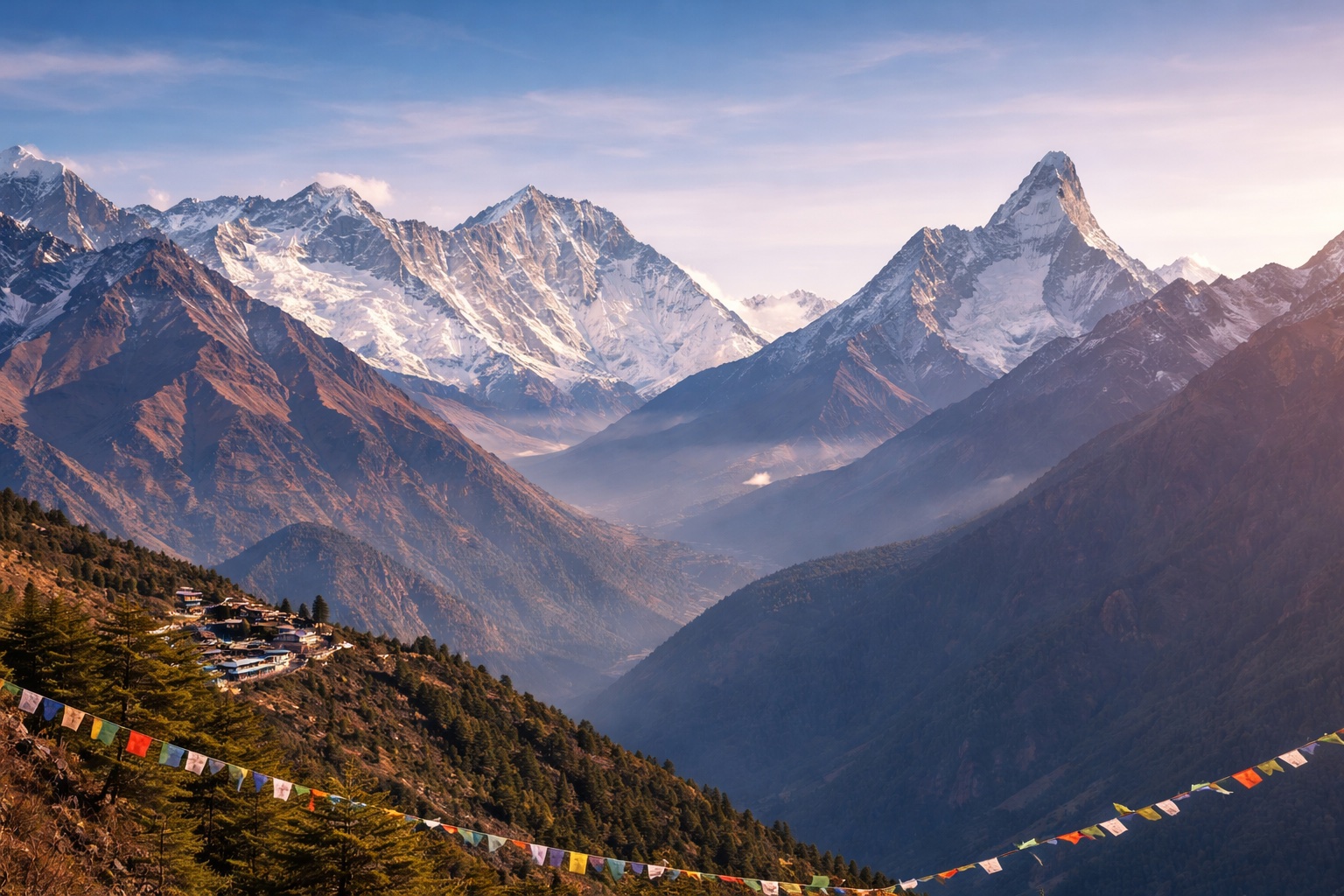
Hiking in Nepal - Day Hikes, Short Trails & Mountain Walks for Everyone
Hiking in Nepal spans an extraordinary range of difficulty, altitude, and landscape — from gentle two-hour forest walks on Kathmandu's rim to the multi-day high mountain routes that grade naturally into the category of trekking. The distinction between hiking and trekking in Nepal is largely one of duration and overnight commitment: hiking typically refers to day walks or half-day excursions that return to a base in the evening, while trekking implies multi-day journeys with tea house or camp overnight stays. Both categories deliver the essential Nepal mountain experience — dramatic scenery, cultural encounters, and physical immersion in a mountain landscape of unmatched grandeur — and both are accessible to visitors with varying levels of experience and fitness.
Nepal's day hiking opportunities are concentrated around the three main visitor destinations — Kathmandu, Pokhara, and the Himalayan foothills — and provide some of the most rewarding short mountain walks available anywhere in Asia. Many of Nepal's best day hikes offer Himalayan panoramas, Buddhist and Hindu sacred sites, and ecological diversity that longer trekking routes in other countries simply cannot provide within a single day's walking distance of an urban base.
Day Hikes Near Kathmandu
Shivapuri Nagarjun National Park
Shivapuri Nagarjun National Park covers the northern hills directly above Kathmandu, beginning less than thirty minutes' drive from the city centre. The park's 144 square kilometres of dense mixed forest — oak, rhododendron, and bamboo — shelter leopards, Himalayan black bears, deer, and a remarkable variety of bird species including critically endangered species monitored by Nepal's ornithological research stations. The trail to Shivapuri Peak (2,732 m) takes four to five hours round trip from the park entrance, gaining 600 metres of altitude through forest that feels genuinely wild. The summit delivers views of the entire Himalayan arc from Ganesh Himal in the west to Jugal Himal in the east — a panorama of extraordinary breadth for a summit reachable on a day trip from the capital.
The park also contains the sacred Budhanilkantha Temple at its southern entrance — a 5th-century recumbent Vishnu statue considered one of Nepal's finest examples of Licchavi-period stone carving — making the Shivapuri hike a combination of natural and cultural experience that other day hike destinations cannot match.
Nagarkot: Himalayan Sunrise Above the Valley
Nagarkot (2,175 m), perched on the eastern rim of the Kathmandu Valley thirty-two kilometres from the city, is Nepal's most accessible Himalayan viewpoint and one of the finest sunrise watching locations in Asia. On clear mornings — most reliably in autumn and spring — the view from Nagarkot encompasses a sweep of the Himalayan range from the Annapurna massif in the west through Manaslu, Langtang Lirung, Dorje Lakpa, and Jugal Himal to Kanchenjunga in the far east — over 200 kilometres of mountain terrain visible from a single viewpoint. The early morning light on Bhrikuti and the twin summits of the range creates the same golden alpenglow that makes the famous Poon Hill sunrise so celebrated, at a fraction of the walking distance from Kathmandu.
The hike from Nagarkot to Changu Narayan — a three-to-four-hour walk along the valley rim through farming villages and forest — combines the morning sunrise experience with a visit to one of Nepal's finest and oldest temples. Changu Narayan (1,541 m), a UNESCO World Heritage Site, contains the oldest surviving inscription in Nepal (dated 464 CE) and stone sculptures from the 4th-12th centuries that are considered masterworks of Licchavi artistic achievement.
Phulchowki: The Rhododendron Forest
Phulchowki Hill (2,762 m), at the southeastern rim of the Kathmandu Valley, offers one of the valley's finest rhododendron forest hikes and a summit panorama that rivals Nagarkot's. The trail climbs four to five hours through dense mixed forest — rhododendron, oak, and magnolia — to a summit with sweeping views south over the Terai lowlands and north to the Himalayan range. In season (February-April), Phulchowki's rhododendron forests are spectacular, and the hill is internationally recognised as one of South Asia's finest birding locations — over 260 species recorded.
Day Hikes Near Pokhara
Sarangkot: Annapurna Sunrise
Sarangkot (1,592 m) is the Pokhara equivalent of Nagarkot — a hilltop viewpoint above the city that delivers the region's finest sunrise panorama over the Annapurna and Dhaulagiri ranges. The two-hour hike from Pokhara's lakeside district arrives at the summit viewing tower before dawn. The sunrise light on Machhapuchhare (6,993 m) — the Fish Tail peak that defines Pokhara's mountain backdrop — is the morning's primary visual event, the distinctive twin summit igniting gold against the deep blue pre-dawn sky. A paragliding flight from Sarangkot after sunrise combines the hiking and aerial dimensions of the Pokhara adventure experience in a single morning.
World Peace Pagoda
The Japanese Peace Pagoda above Phewa Lake is accessible by a one-hour forested trail from the lake's south shore — a pleasant and visually rewarding half-day hike with views of the lake, Pokhara, and the Annapurna range throughout. The pagoda itself is a Japanese-built Buddhist stupa of simple white marble, its calm geometric presence above the valley providing a meditative counterpoint to the more dramatic mountain hikes above the city.
Short Treks That Begin Like Hikes
Several of Nepal's most celebrated multi-day treks begin with hiking-level approaches that can be sampled as day excursions if overnight commitment is not possible. The first day of the Poon Hill trek (Nayapul to Tikhedhunga, three to four hours) delivers classic Gurung village culture and Modi Khola river scenery within a two-hour drive from Pokhara, returning the same afternoon. The Langtang Valley trail from Syabrubesi can be walked for three to four hours into the park and returned the same day, delivering the national park forest and first valley views without the overnight investment of the full trek. These day excursions into the trekking routes are increasingly popular with visitors who want to understand what the full trek experience offers before committing to the multi-day journey.
Hiking Safety and Preparation
Day hikes in Nepal carry lower altitude and logistics demands than multi-day treks, but certain preparations remain important. Sun protection is critical — UV radiation at even 2,000-2,700 metres (the altitude of most Kathmandu-rim hikes) is significantly more intense than at sea level. Carry more water than you think necessary — dehydration is the most common cause of early fatigue on Nepal hikes. Wear broken-in, ankle-supporting footwear — many trail surfaces are uneven stone or packed earth, and rolled ankles are the most common minor hiking injury. Start early in the morning, particularly in spring and autumn when afternoon cloud build-up on the ridge tops can reduce visibility and bring light rain by early afternoon.
Hiring a local guide for day hikes near Kathmandu and Pokhara is recommended for first-time visitors who are unfamiliar with Nepal's trail systems and cultural sites. A guide provides navigation security, cultural context, and the kind of local knowledge — the best tea house at the summit, the hidden viewpoints off the main trail, the village elder who will show you the ancient manuscript in the monastery — that transforms a pleasant walk into a genuinely memorable Nepal experience.
Connecting Day Hikes to Longer Adventures
Nepal's day hiking landscape connects naturally to the full spectrum of Himalayan adventure. Many trekkers begin with a Nagarkot or Shivapuri day hike to understand the physical demands of mountain trails before committing to a multi-day itinerary. Others use day hikes at the beginning or end of longer treks as altitude preparation or post-trek recovery walking. The progression from day hiking to multi-day trekking to high-altitude peak climbing is one that Nepal's infrastructure uniquely supports at every transition point — the same guides, the same agencies, and the same cultural context scale naturally from a two-hour Kathmandu forest walk to a two-week Himalayan circuit.