
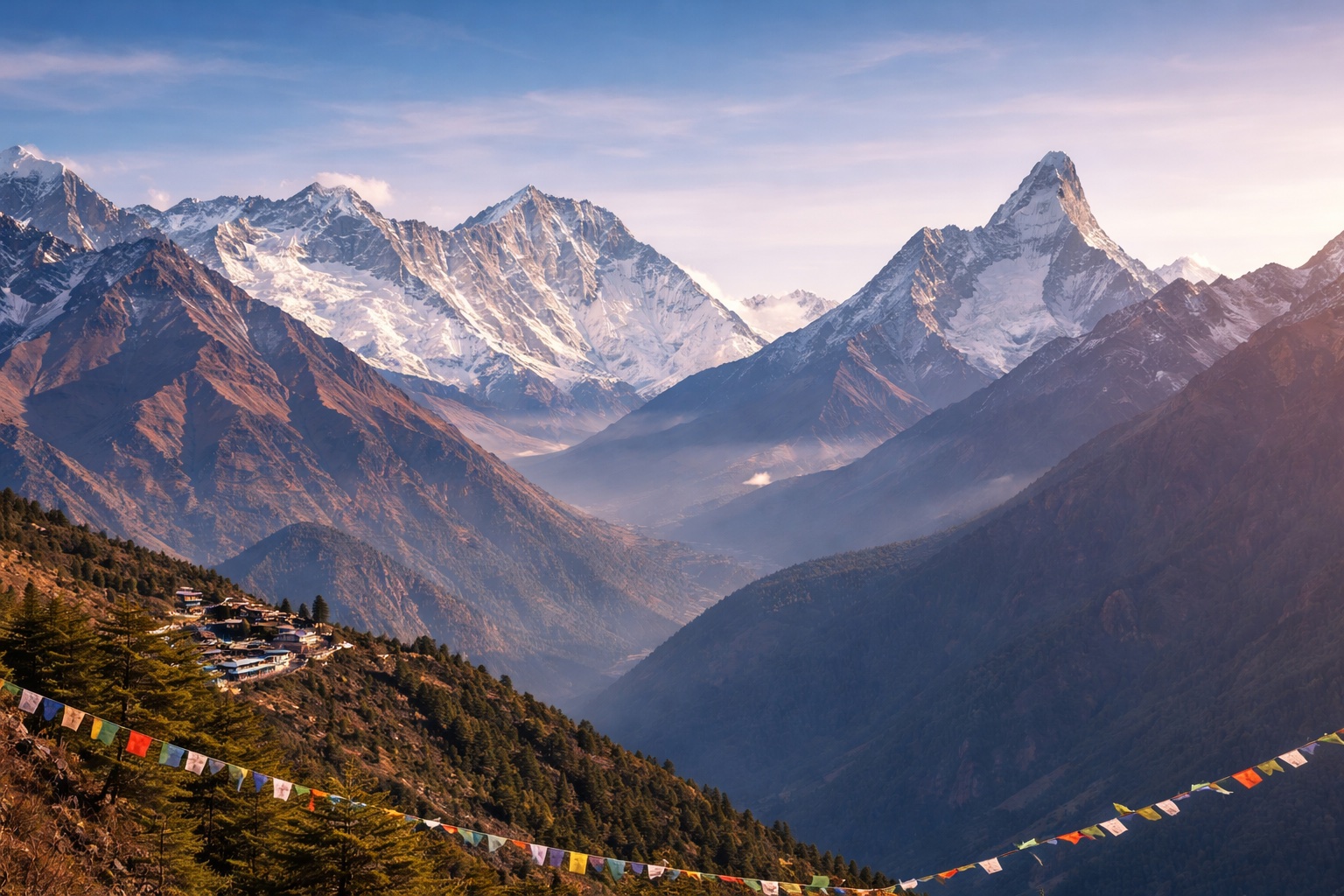
Gosaikunda (4,380 m) — Nepal's most sacred high-altitude lake and one of Hinduism's most revered pilgrimage destinations — by private helicopter from Kathmandu in under 30 minutes. The glacial lake where Shiva is said to have created the Trishuli River by plunging his trident into the earth, surrounded by 5,000–6,000 m peaks of the Langtang range. Walk the sacred shoreline, visit the Gosaikunda Shrine, and return to Kathmandu by midmorning.
The Gosaikunda Helicopter Tour delivers one of Nepal's most spiritually and visually significant landscapes in a single morning — a 25-minute flight from Kathmandu to the sacred lake of Gosaikunda (4,380 m), perched on the high ridge above the Langtang valley in Rasuwa District. For millions of Hindu devotees across Nepal and India, Gosaikunda is among the holiest lakes in the Himalaya — the site where Lord Shiva, suffering from the poison that emerged during the churning of the cosmic ocean (Samudra Manthan), plunged his trident (Trishul) into the earth, creating the spring that became the lake and purifying the surrounding land. The lake's overflow is traditionally identified as the source of the Trishuli River, which flows south through the Rasuwagadhi corridor to the Trishuli valley below — a geographical claim that transforms the entire downstream landscape into sacred terrain.
The helicopter tour from Kathmandu reaches Gosaikunda in 25–30 minutes — a journey that trekkers spend 4–5 days completing on foot from Dhunche. The aerial approach from the south reveals the sequence of Gosaikunda's landscape: the forested Langtang hillsides below, the transition to dwarf rhododendron and alpine scrub above 3,500 m, the open ridge crest, and then — appearing suddenly as the helicopter clears the final ridgeline — the brilliant blue disc of the lake set in a bowl of grey glacial moraine and snow-streaked peaks. First-time visitors consistently report the visual shock of the lake's appearance at this altitude: an implausibly vivid blue body of water amid a landscape of grey rock and snow, with the peaks of the Langtang Himal forming a perfect amphitheatre above.
Gosaikunda is not one lake but a series of nine interconnected alpine lakes (the Gosaikunda Lake Complex) arranged across the high ridge above the Langtang valley. The main Gosaikunda lake is the largest and most sacred, but Saraswatikunda, Bhairavkunda, and Suryakunda are also visited by pilgrims and lie within walking distance (30–60 minutes) of the helicopter landing zone. At the centre of the main lake, a large dark rock protrudes from the water at low levels — believed by Hindu devotees to be the Shivalinga (the aniconic form of Shiva) that marks the spot where the god's trident struck the earth. The rock's presence in the middle of the lake, combined with the profound stillness of the high-altitude setting, creates an atmosphere of genuine sanctity that visitors of all religious backgrounds consistently find affecting.
The Gosaikunda Shrine (Gosaikunda Mandir) at the lake's shore is a simple stone structure maintained by a resident pandit (Hindu priest) who lives at 4,380 m year-round — one of the highest permanent religious residences in Nepal. The shrine holds a small brass image of Shiva and is the focus of the annual Janai Purnima pilgrimage (August full moon), when tens of thousands of Hindu devotees (primarily from Nepal's Brahmin and Chhetri communities) climb to Gosaikunda to bathe in the sacred water and change the Janai (sacred thread worn by high-caste Hindu men). The Janai Purnima gathering at Gosaikunda — with pilgrims arriving from all directions, chanting Shiva mantras on the lakeshore at 4,380 m, and bathing in the near-freezing water at dawn — is one of the most extraordinary religious events in Nepal and draws a significant number of international observers in addition to the domestic pilgrim crowd.
The Gosaikunda helicopter flight from Kathmandu passes over the Shivapuri Nagarjun National Park — the protected forest buffer immediately north of the capital — and then crosses the Tadi Khola and the first Himalayan ridges before entering the Langtang National Park corridor. The flight altitude provides comprehensive views of the Ganesh Himal to the west (Ganesh I at 7,422 m, Paldor at 5,896 m) and the Langtang Himal to the east (Langtang Lirung at 7,227 m, Dorje Lakpa at 6,966 m, Shishapangma visible across the Tibetan border in clear conditions). The Laurebina La (4,610 m) — the high pass that connects the Gosaikunda lakes to the Helambu trekking area — is visible from the helicopter as the aerial entry point into the lake complex, a notch in the ridge crest that frames the Kathmandu valley to the south and the Langtang valley to the north.
The helicopter landing zone at Gosaikunda is a flat gravel area approximately 200 m from the lakeshore. From the landing zone, a short walk reaches the Gosaikunda shoreline, the shrine, and the resident pandit's tea house — the highest year-round tea house in Nepal at 4,380 m and one of the most atmospheric places to eat breakfast in the country. The standard ground stop (45–60 minutes) allows the shrine visit, the lakeshore walk, breakfast at the tea house, and a 15-minute walk to the first secondary lake (Saraswatikunda). For clients interested in extending the ground time for photography or further lake exploration, we can arrange 2-hour ground stops with the pilot holding at Dhunche.
Gosaikunda's sacredness derives from the Shiva Purana narrative in which Lord Shiva, suffering from Halahala (the cosmic poison produced during the churning of the primordial ocean), struck the earth with his trident at this location to create a cooling spring. The lake that formed became sacred as Shiva's own creation — a site of divine contact with the physical earth. The rock visible at the centre of the lake during low-water periods is identified as the Shivalinga that marks the strike point. Additionally, Gosaikunda's overflow is the traditional source of the Trishuli River (Trishuli meaning "trident"), which flows south through Nepal — transforming the entire downstream river system into sacred terrain. For Nepal's Brahmin and Chhetri communities, Gosaikunda is second only to Pashupatinath in Kathmandu as a Shiva pilgrimage destination.
Janai Purnima (also called Raksha Bandhan in northern India) is the full moon festival of the Hindu month Shrawan (typically late July or early August) when Hindu men of the twice-born castes (Brahmin, Chhetri) change the Janai — the sacred thread worn over the left shoulder. The most sacred way to perform this ritual is by bathing in Gosaikunda's waters at dawn on Janai Purnima. Tens of thousands of pilgrims make the 4–5 day walk to Gosaikunda every year for this event — the helicopter tour allows participation in the ritual without the multi-day trek. We strongly recommend booking the Gosaikunda helicopter tour for the Janai Purnima date if your travel schedule permits — the atmosphere on the lakeshore during the full-moon festival, with thousands of pilgrims chanting at dawn at 4,380 m, is one of the most extraordinary religious experiences available in Nepal. The specific date varies each year according to the lunar calendar — enquire for the current year's date when booking.
The Gosaikunda and Langtang tours depart from Kathmandu and take similar flight times (25–30 minutes) but reach fundamentally different destinations. Gosaikunda (4,380 m) is a sacred religious site — the primary draw is the holy lake, the shrine, and the Shiva pilgrimage significance. Langtang (Kyanjin Gompa, 3,870 m) is a mountain village known for its yak cheese factory, Buddhist monastery, and proximity to Langtang Lirung's north face. The Gosaikunda tour is particularly meaningful for Hindu devotees and those seeking a sacred natural environment. The Langtang tour is better for those primarily interested in mountain scenery and Himalayan culture. Both are extraordinary — many Kathmandu visitors do both on consecutive mornings.
Gosaikunda is partly in the monsoon rain shadow (the upper section of the Rasuwa ridge receives less precipitation than the valleys below), and morning helicopter departures are often possible even in July and August when the valleys are cloudy. The Janai Purnima festival, which falls in July–August, is the most popular time for Gosaikunda visits, and helicopter operations typically continue through the festival period. That said, the monsoon does bring frequent cloud and occasional poor-visibility days — our operations team monitors conditions daily and reschedules without penalty when the flight is unsafe. October–November and March–May are the most reliably clear windows.
The standard 45–60 minute ground stop allows the main Gosaikunda lake, the shrine, and a short walk to Saraswatikunda (the first secondary lake, 15 min from the helipad). With a 90-minute ground stop (available on request, subject to pilot schedule), you can also reach Bhairavkunda and walk along the main lake's northern shoreline toward the Laurebina La pass. We can arrange extended ground stops for photography clients or pilgrims who want more time for circumambulation — enquire when booking.
At 4,380 m, Gosaikunda is significantly colder than Kathmandu year-round. Even in October (when Kathmandu is 20–25°C), the temperature at Gosaikunda can be 0–5°C with wind. In winter (December–February), temperatures at the lake regularly reach -10 to -15°C. Wear warm base layers, a fleece or down mid-layer, a windproof outer layer, warm gloves, and a hat. Good walking shoes (not flip-flops or sandals) are essential for the rocky lakeshore. Sunscreen is critical at 4,380 m — UV radiation at high altitude is much stronger than at sea level. We provide a packing list for all helicopter tour bookings.