
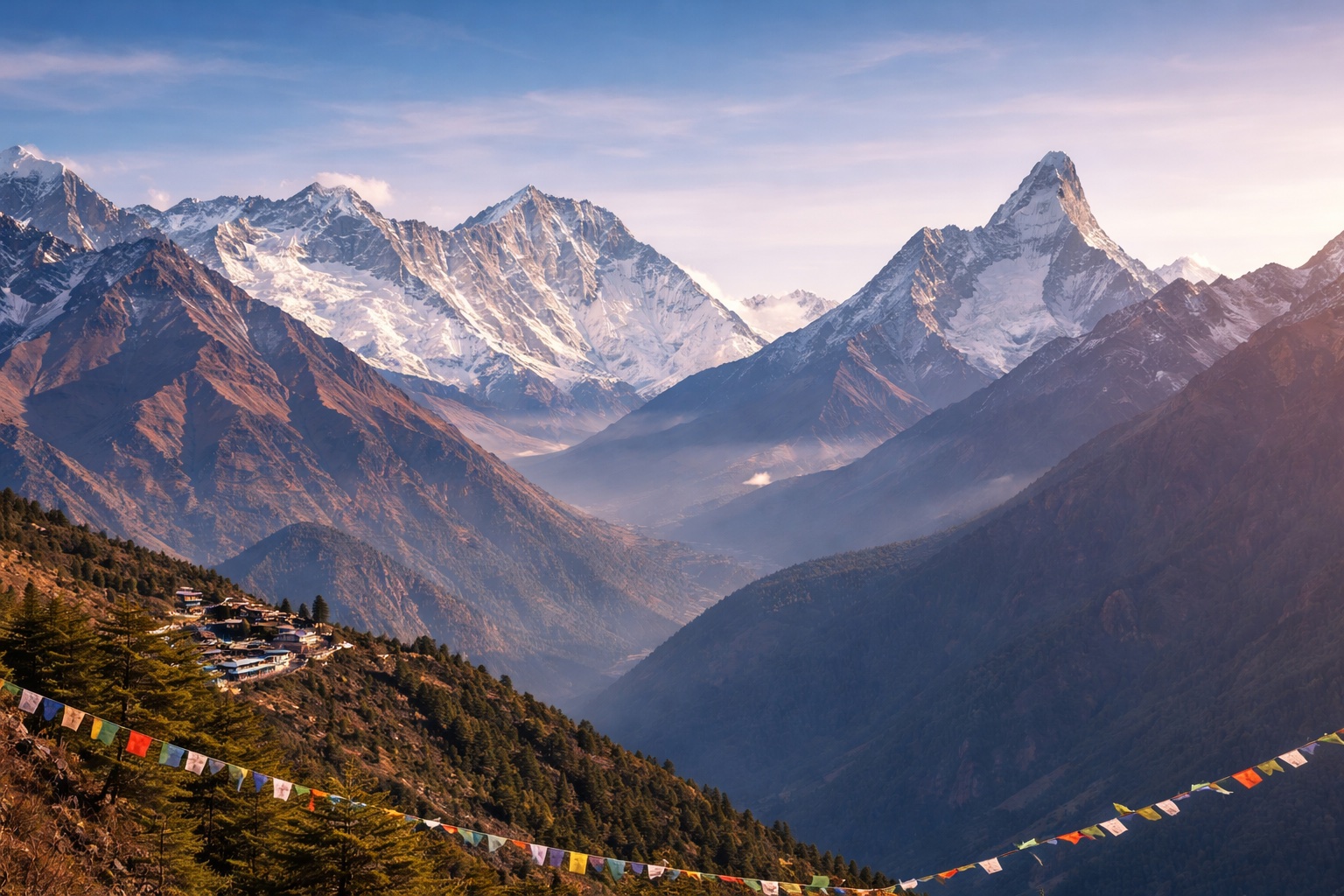
Climb Chulu Far East (6,059 m) — the most technically rewarding peak on the Annapurna Circuit, combining the complete Annapurna Circuit trek with a technical summit above the Thorong La. A 360° summit view of Annapurna, Dhaulagiri, Manaslu, and the full Himalayan arc.
Chulu Far East (6,059 m) is the most respected trekking peak in the Annapurna region — a technical objective that sits directly above the upper Manang valley on the north side of the main Annapurna massif, visible from the Annapurna Circuit trail below as a wedge of ice and rock rising above the high pastures east of Manang village. The peak is less well-known internationally than Island Peak or Mera Peak — it receives fewer than 300 summit attempts per year — but among Nepal trekking guides and mountaineering instructors it is consistently rated as the finest summit experience in the trekking peak category: technically more demanding than Island Peak, with a more spectacular approach, a harder summit day, and a 360° panorama from the top that includes Annapurna I (8,091 m), Dhaulagiri (8,167 m), Manaslu (8,163 m), Gangapurna (7,455 m), and the full northern arc of the Himalayan range in a single unobstructed sweep.
The Chulu Far East summit route is a genuine alpine climb — more demanding than Island Peak and significantly more demanding than Mera Peak. The route above Base Camp involves sustained glacier travel, a steep north ridge (45–55 degrees in places), fixed rope sections on the upper face, and a narrow summit plateau with exposure on both sides. Trekkers who have previously summited Island Peak and want a more serious technical challenge consistently choose Chulu Far East as their next objective. Those who summit it consistently describe it as the most satisfying single-day physical achievement of their Nepal career.
The Chulu Far East approach follows the complete Annapurna Circuit from Besisahar — the 14-day route through the deepening Marsyangdi Gorge, the Tibetan cultural transition at Dharapani and Chame, the iconic Pisang Peak viewpoints, and the acclimatisation stage at Manang (3,519 m). This approach is the best acclimatisation profile available for a 6,000 m trekking peak in Nepal — by the time you reach the Chulu Base Camp, you have been at altitude for twelve days and your body's oxygen-carrying adaptation is substantially complete. The full circuit approach also means the trek delivers two complete experiences: the finest long-distance trekking route in the Annapurna region and a genuine Himalayan summit.
Chulu Far East Base Camp sits at approximately 4,900 m above the high pastures east of Manang, reached by a 4-hour approach from the main circuit trail. The summit day begins at midnight — a 7–9 hour round trip on the north ridge that involves glacier approach, a steep couloir, fixed rope sections on the upper face, and the final push to the summit plateau. The summit at 6,059 m is a broad flat platform of snow and ice with nothing visible above it on all sides except the Himalayan arc. The experience of standing above everything around you — Annapurna's north face directly to the west, the Thorong La route visible far below, the curvature of the earth's atmosphere giving the distant peaks a faint blue tint — is one that every summiteer describes in terms that are inadequate to the reality.
After descending from the Chulu summit, the complete Annapurna Circuit itinerary continues over the Thorong La Pass (5,416 m) — the circuit's famous high crossing — and down to Muktinath, the sacred Hindu and Buddhist pilgrimage site, before completing the western side of the circuit through Jomsom, Tatopani, and Pokhara. The complete combination of Annapurna Circuit + Chulu Far East summit is our 18-day package — one of the most comprehensive and rewarding Nepal trekking experiences available at any difficulty level.
Island Peak (6,189 m) is slightly higher but Chulu Far East (6,059 m) is significantly more technically demanding. Chulu's north ridge is steeper, the fixed rope section is longer, and the summit plateau is narrower with more exposure. Island Peak is the better first Himalayan trekking peak. Chulu Far East is the natural step up for climbers who have already summited Island Peak and want a harder objective. The summit panorama from Chulu Far East — Annapurna I, Dhaulagiri, and Manaslu all visible — is superior to Island Peak's.
Prior technical climbing experience is strongly recommended — ideally at least one previous NMA trekking peak summit (Island Peak or Mera Peak) or equivalent alpine experience with crampons and fixed ropes. Our training day at Base Camp covers all required techniques for first-time users, but the summit day demands significant fitness and altitude resilience in addition to technical competence. This is not the right objective for a first Himalayan trekking peak.
NMA Chulu Far East climbing permit (USD 250 per person for spring/autumn), ACAP (USD 30), TIMS (USD 20). All included in our package.
Yes — our 18-day itinerary follows the complete Annapurna Circuit from Besisahar, includes the Chulu Far East summit, crosses the Thorong La, visits Muktinath, and exits at Pokhara via Jomsom flight. This is the complete circuit-plus-summit experience and the most comprehensive Nepal trekking and climbing package we offer.
Our Chulu Far East summit success rate is 78–85% across both seasons. The main variables are weather on summit day and individual fitness at altitude. The acclimatisation profile of the Annapurna Circuit approach (10 days above 2,000 m before the summit attempt) is excellent preparation and significantly improves the success rate compared to faster approaches.