
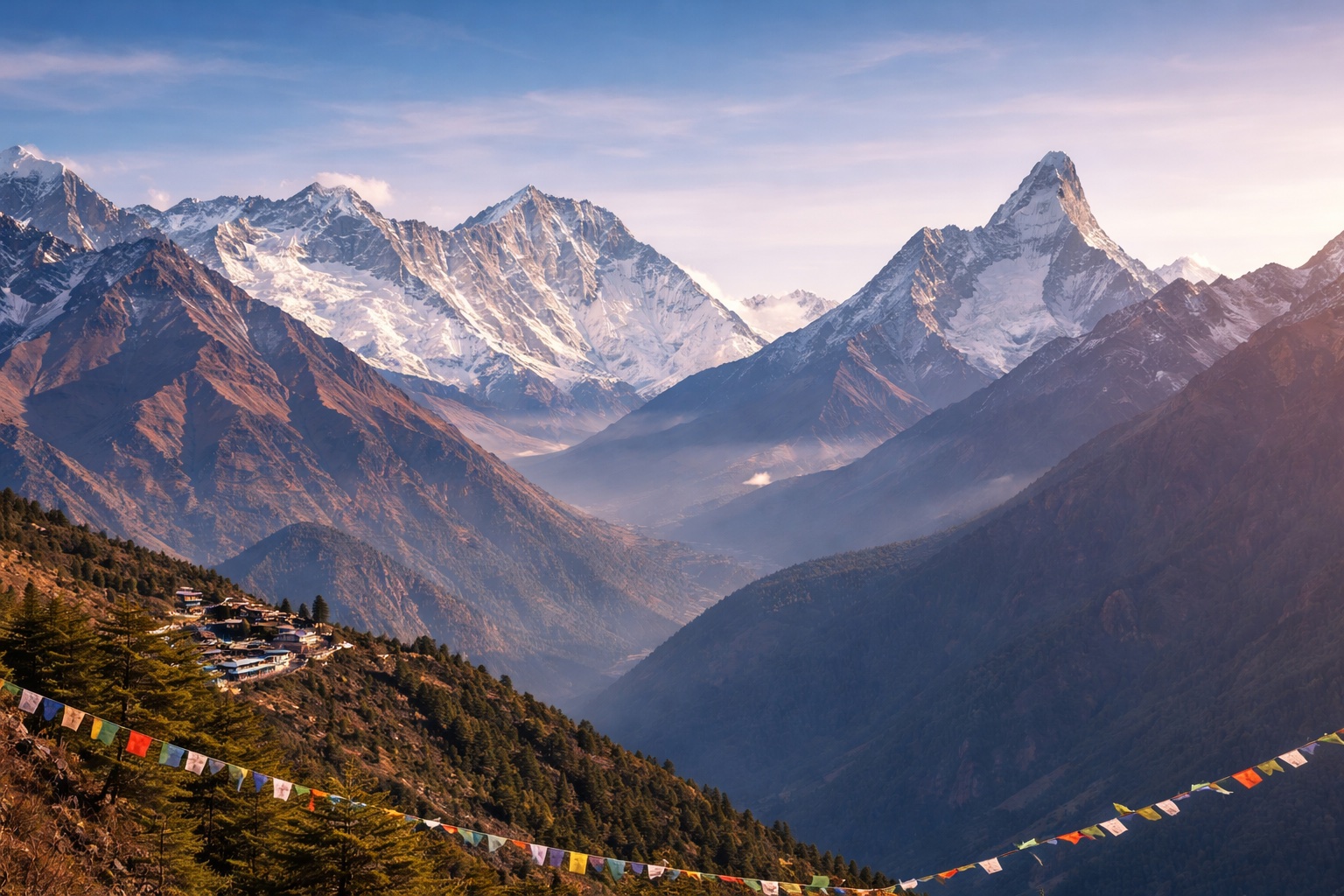
Peak Climbing in Nepal - Trekking Peaks from 5,600 m to 6,476 m
Nepal's trekking peak system — established by the Nepal Mountaineering Association (NMA) in 1978 — created a category of mountain objective that sits between pure trekking and full expedition mountaineering. Thirty-three peaks ranging from 5,587 to 6,654 metres are designated as trekking peaks, accessible to non-expedition climbers with appropriate permits, qualified guides, and basic mountaineering skills. The two most popular — Mera Peak (6,476 m) and Island Peak / Imja Tse (6,189 m) — collectively receive several thousand climbers annually and have become the defining "first 6,000-metre summit" objectives for mountain enthusiasts worldwide.
What Makes Nepal's Trekking Peaks Special
The trekking peak system was designed with a specific philosophy: to make high-altitude summit experiences accessible to fit, motivated non-mountaineers while maintaining the safety and environmental standards appropriate for mountain environments above 6,000 metres. It works because the selected peaks combine genuine altitude achievement with approaches that suit the existing teahouse trekking infrastructure — you walk to Base Camp on the same trails used by trekkers, staying in the same lodges, before transitioning to tented high camp and the technical summit day.
This structure means that a Mera Peak or Island Peak climbing package is genuinely accessible to someone who has never worn crampons before. The technical skills required — crampon and ice axe use, ascending fixed ropes with a jumar, roped glacier travel — are learnable and practised during a pre-summit training session at Base Camp. What cannot be substituted is the physical preparation: these summits demand strong cardiovascular fitness, comfortable altitude acclimatisation, and the mental reserves to sustain effort at over 6,000 metres in cold, thin air. But the technical barrier is genuinely lower than most non-mountaineers assume.
Mera Peak (6,476 m): Nepal's Highest Trekking Peak
Mera Peak is the highest legally climbable trekking peak in Nepal and holds a special status among high-altitude objectives worldwide. At 6,476 metres, it stands higher than any mountain in the Alps, the Andes, or the Rocky Mountains — only the Tibetan plateau and the Himalayas have anything above it. The summit is not technically demanding by mountaineering standards (30-35 degree snow slopes on a well-defined ridge), which means that the experience it delivers — five 8,000-metre peaks visible simultaneously from the summit — is accessible to a category of trekker who would never attempt a genuine technical mountaineering objective.
The five 8,000-metre peaks visible from Mera's summit on a clear day are: Everest (8,849 m) due north, Lhotse (8,516 m) east of Everest, Makalu (8,485 m) further east, Cho Oyu (8,188 m) northwest, and Kanchenjunga (8,586 m) far to the east. No other trekking peak in Nepal — or indeed anywhere in the world — offers this concentration of 8,000-metre summits in a single panorama. The view is so extraordinary that it has been used in more than one mountaineering documentary as a visual shorthand for the density of Himalayan altitude.
The approach through the Hinku Valley is one of Mera's most distinctive features. Unlike Island Peak — accessible as an extension of the heavily trekked EBC route — Mera requires a dedicated approach through an almost entirely unvisited wilderness corridor east of the Khumbu. The three-day walk from Lukla through Zatrwa La Pass (4,610 m) to Kothey and Khare passes through rhododendron and cloud forests that the vast majority of Khumbu-focused trekkers never see. The remoteness is both the route's logistical challenge and its greatest experiential reward.
Island Peak / Imja Tse (6,189 m): Nepal's Most Popular 6,000m Climb
Island Peak earned its name from the British Everest reconnaissance expeditions of the early 1950s, which saw the mountain rising like an island above the surrounding glaciers when viewed from Dingboche. First climbed by a team from the 1953 Everest expedition as a training exercise, it has been Nepal's most climbed trekking peak for decades — a combination of accessible location, achievable technical demands, and exceptional summit views has made it the standard-setter for 6,000-metre objectives in Nepal.
Island Peak's summit headwall is the defining feature that separates it from pure trekking. The fixed rope section — approximately 60-80 metres of near-vertical ice and snow above the glacier approach — requires genuine crampon technique, ice axe confidence, and jumar competency to ascend safely. This technical section is what makes Island Peak a genuine mountaineering experience rather than just a high-altitude walk. Above the headwall, the summit ridge leads gently to the top at 6,189 m, where Lhotse (8,516 m) towers overhead at genuinely overwhelming proximity and Everest's pyramid is visible to the north.
The standard Island Peak itinerary combines the climb with the Everest Base Camp trek in an eighteen-day journey that provides excellent acclimatisation, visits all the major Khumbu landmarks, and adds the mountaineering summit as the ultimate high-altitude achievement. It is one of Nepal's finest adventure itineraries and appeals strongly to trekkers who want more than a walking journey.
Technical Preparation
Skills Required
Both Mera Peak and Island Peak require basic mountaineering skills that are learnable with instruction. The essential skills are: crampon attachment and movement on steep snow and ice; ice axe self-arrest technique (stopping a fall on a snow slope); ascending fixed ropes using a jumar or ascender; harness and belay device use; and roped glacier travel (walking in a rope team across crevassed terrain). None of these is technically complex — all require instruction and practice before the summit day.
Our climbing guides conduct a full technical training session at Base Camp before the summit attempt, covering all skills with practical exercises on appropriate terrain. Trekkers who arrive with some prior training (even a single day at a climbing wall or on a snow slope in their home country) are noticeably more relaxed on summit day. The investment in pre-trip preparation directly improves the summit experience.
Gear Requirements
In addition to standard high-altitude trekking gear, peak climbing requires: twelve-point crampons (compatible with your boots — this must be verified before departure), ice axe (T-rated, 60-70 cm), climbing harness, helmet, locking carabiners (minimum two), jumar/ascender, and prussik cord. All items can be hired in Kathmandu's Thamel market for USD 2-5 per day per item. Mountaineering boots compatible with crampons are required — standard trekking boots do not accept crampons reliably. Boot hire is available in Kathmandu for USD 3-5 per day.
NMA Permits and Costs
Both Mera Peak and Island Peak require a Nepal Mountaineering Association (NMA) climbing permit. Current fees: USD 250 per person in spring (March-May), USD 125 per person in autumn (October-November). In addition, the relevant national park permit and TIMS card are required. A complete eighteen-day EBC + Island Peak package starts from USD 2,500 per person. A complete Mera Peak package (18 days from Kathmandu) starts from USD 2,200 per person. All our climbing packages include the NMA permit, all trekking permits, a licensed and experienced NMA-certified climbing guide, porter, domestic flights, tented camp at High Camp, and full-board accommodation throughout.
Choosing Your First Summit
For trekkers choosing between Mera Peak and Island Peak as a first high-altitude climbing objective, the decision often comes down to priorities. If the summit panorama is the primary motivation, choose Mera — its five-8,000m-peak view is genuinely unmatched in Nepal trekking. If combining the summit with the Everest Base Camp experience is more appealing and the additional technical challenge of Island Peak's headwall sounds rewarding rather than discouraging, choose Island Peak. Both are achievable by fit, prepared, well-guided non-mountaineers. Both deliver summit experiences that redefine what trekkers thought they were capable of.
Training Before You Arrive
The most important preparation for Nepal peak climbing is cardiovascular fitness. You need to sustain moderate aerobic effort for six to eight hours — the duration of a summit day — at altitudes where available oxygen is forty to fifty percent of sea-level values. Begin a twelve-week training programme: daily aerobic exercise building from thirty minutes to ninety minutes, stair climbing for uphill endurance, and weekend hikes with a loaded pack of six to eight kilograms. Prior experience at altitude — even a previous trek to 4,000 metres — significantly improves both acclimatisation and confidence on the technical sections above 5,000 metres.
Book Your Nepal Peak Climbing Package
Our Mera Peak packages start from USD 2,200 for eighteen days from Kathmandu, including NMA climbing permit, all trekking permits, licensed climbing guide, porter, Lukla flights, tented High Camp accommodation, and full-board throughout. Island Peak packages start from USD 2,500 for eighteen days combining the EBC trek with the summit. Contact our team to discuss the right objective, season, and preparation plan for your goals.
Standing on a Himalayan summit above 6,000 metres is an experience that reshapes how you think about your own capabilities. The effort, cold, altitude, and technical challenge of the approach combine into a context that makes the summit moment — the pause at the top, the view that no photograph adequately conveys, the knowledge that you climbed here on your own two feet — one of the defining experiences available to any traveller in the world today. Nepal's trekking peaks exist specifically to make this experience accessible to the motivated non-mountaineer. Our job is to help you get there safely.
Nepal's trekking peak system celebrates its fiftieth year in 2028 having transformed the mountain travel industry. The original insight behind it remains as valid today as it was in 1978: that the experience of genuine high-altitude achievement, delivered safely and sustainably, is one of the most compelling and life-changing adventures available to any traveller. Mera Peak and Island Peak are the clearest expressions of that insight in Nepal's mountain landscape today.