
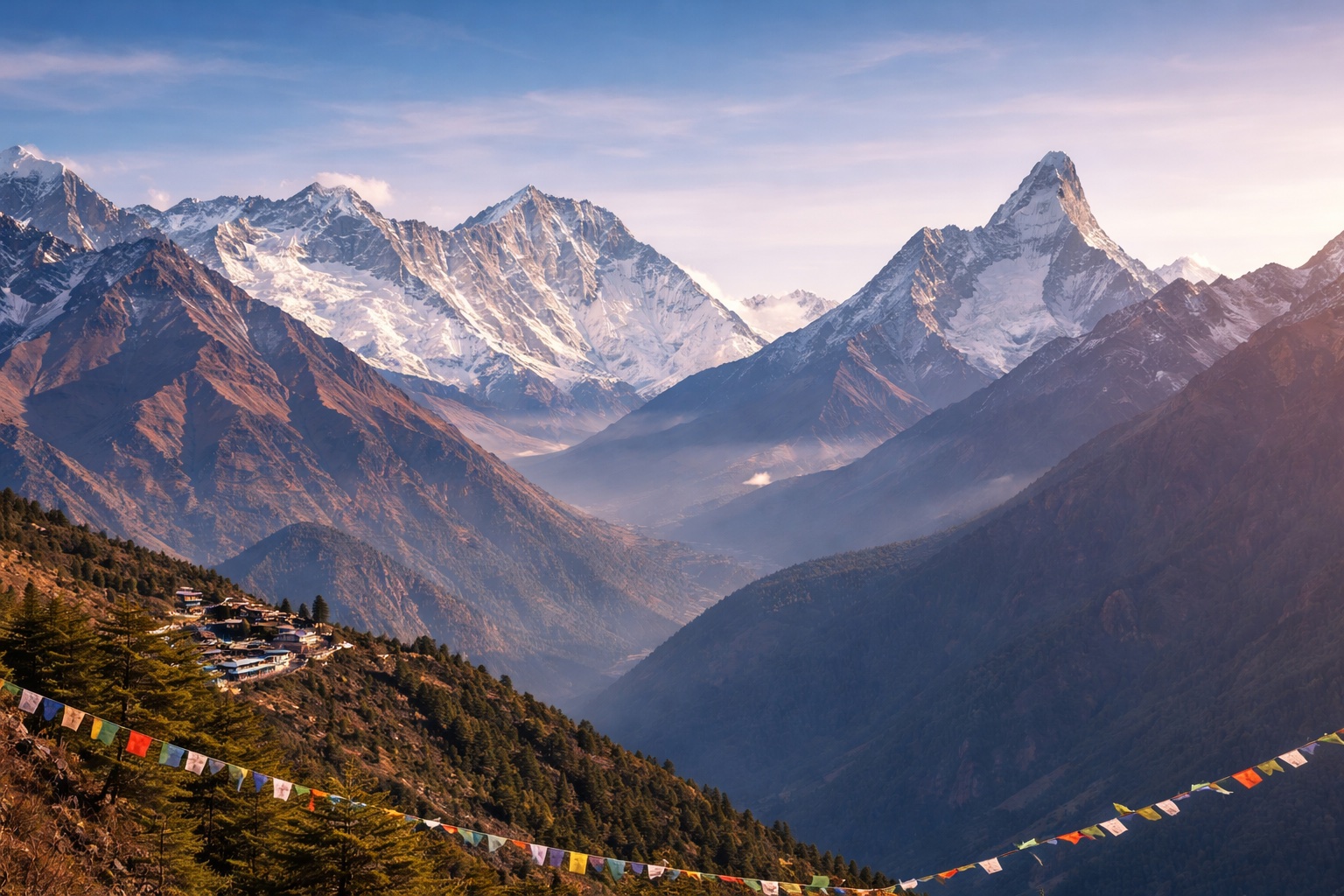
Langtang Region Trekking - Nepal's Valley of Glaciers Near Kathmandu
The Langtang region occupies a unique position among Nepal's trekking destinations: it delivers genuine high-mountain Himalayan wilderness within three hours' drive of Kathmandu's international airport. For trekkers with limited time, a preference for quieter trails, or an interest in Tibetan Buddhist culture in its most unselfconsciously authentic expression, Langtang is Nepal's finest answer. The valley runs north from the subtropical hills above Syabrubesi to the glaciated flanks of the Langtang Himal — a mountain range that forms part of Nepal's border with Tibet — delivering a concentration of spectacular scenery, cultural richness, and wilderness quality that the more-visited Everest and Annapurna regions cannot match for intimacy and accessibility.
The Langtang Himal: A Border Range
The Langtang Himal is a relatively compact mountain range, but what it lacks in the celebrity of the Everest and Annapurna ranges it compensates for in dramatic beauty and accessible proximity. Langtang Lirung (7,227 m) is the highest peak in the range and one of Nepal's most visually imposing mountains — its western face, seen from Kyanjin Gompa at the head of the valley, rises 3,300 metres from the valley floor in a near-continuous sweep of ice, rock, and glacier. Gang Chhenpo (6,388 m), Langtang II (6,571 m), Dorje Lakpa (6,966 m), and Yala Peak (5,732 m) complete the visible range from the trek's upper sections.
The northern walls of the valley are Tibetan in both geological character and cultural influence. The Tibetan Plateau is visible from Tserko Ri's summit (4,984 m), stretching endlessly to the north across the border — a visual reminder that Langtang's culture, architecture, and people are as much an expression of Tibet as of Nepal's Himalayan traditions.
Langtang National Park
Langtang National Park was Nepal's first Himalayan national park, established in 1976 — the same year as Sagarmatha (Everest region). Its 1,710 square kilometres protect a remarkable elevational range from 800 to 7,227 metres, encompassing subtropical forest, temperate rhododendron and bamboo groves, alpine scrub, and permanent glacier and snowfield. The park's biodiversity is extraordinary: red pandas (Ailurus fulgens) — the russet, raccoon-sized mammal that is far rarer and more elusive than its giant namesake — inhabit the rhododendron and bamboo forests between 2,000 and 4,000 metres. Himalayan tahr (wild mountain goats), musk deer, snow leopards, and Himalayan black bears are present at various elevations.
The park is also one of Nepal's most important ornithological regions. Blood pheasants, Himalayan monals (Nepal's national bird), yellow-billed choughs, lammergeiers, and numerous warbler, thrush, and finch species make the forests between Syabrubesi and Kyanjin Gompa valuable for birdwatching throughout the trekking seasons. The park entry permit (NPR 3,000) funds conservation and the ongoing work of rebuilding trail infrastructure following the 2015 earthquake.
The 2015 Earthquake and the Rebuilt Valley
On April 25, 2015, the same magnitude 7.8 earthquake that devastated much of Nepal triggered a catastrophic ice-rock avalanche from the flank of Langtang Lirung that buried most of Langtang village. Approximately 370 people were killed — a combination of local villagers and foreign trekkers who were caught in the valley during the earthquake. The disaster was one of the worst single-incident tragedies in Nepal's trekking history.
What has happened since is remarkable. The Langtang community — with support from the Nepal government, international NGOs, and the trekking industry — has rebuilt the village, reopened the tea houses, and welcomed trekkers back to a valley that has been physically and emotionally transformed by the experience of loss and recovery. A stone memorial at the edge of the rebuilt village honours those who were lost. Trekking through Langtang today carries a particular quality of meaning: you are walking in solidarity with a community that refused to be defined by a single catastrophic moment.
Kyanjin Gompa and the Yak Cheese Factory
Kyanjin Gompa (3,870 m) is the trekking destination at the head of the Langtang Valley. The ancient Tibetan Buddhist monastery has served the Tamang community for centuries and continues to be administered by monks who maintain daily ceremony. The monastery's setting — the Langtang Lirung glacier filling the sky directly behind it — is one of Nepal's most dramatic sacred landscape compositions.
Adjacent to the monastery, the yak cheese factory is one of Nepal's most unexpected delights. Established in the 1950s with technical assistance from Swiss development organisations, the factory produces fresh and aged hard cheese from the milk of the high-altitude yaks that graze the valley above 3,500 metres. The cheese has the density and flavour of a good Alpine mountain cheese — rich, slightly salty, excellent with local bread. The production process is observable, the cheese is available for purchase in blocks, and the factory has been continuously producing for nearly seventy years — a quiet legacy of Swiss-Nepali cooperation that outlasted the development project that created it.
Tserko Ri: The Region's Finest Summit
Tserko Ri (4,984 m) is the optional summit hike from Kyanjin Gompa and the visual highlight of the entire Langtang trek. The 5-6 hour round trip involves 1,100 metres of ascent on steep but straightforward terrain with no technical difficulty. The summit panorama includes Langtang Lirung (7,227 m) and its glacier directly north, Langtang II and Gang Chhenpo to the east, Dorje Lakpa to the northeast, and — on clear days — the Tibetan Plateau extending to the northern horizon. This is one of Nepal's finest summit viewpoints achievable on a non-technical trail by any reasonably fit and acclimatised trekker.
The altitude (4,984 m) requires proper acclimatisation — the rest day at Kyanjin Gompa the day before is essential preparation, and the same morning principles as any altitude hike apply: early start, plenty of water, and honest communication with your guide about how you feel.
Tamang Culture: Tibet's Himalayan Expression
The Tamang people who inhabit the Langtang Valley and surrounding hills are one of Nepal's largest ethnic groups and among the most culturally interesting. Their origins are Tibetan — the word "Tamang" is believed to derive from the Tibetan for "horse trader" — and their language (Tamang), religion (Tibetan Nyingma Buddhism), architecture, and daily culture are rooted in the Tibetan plateau tradition that carried across the Himalayan passes centuries ago. The monasteries of the Langtang Valley are functioning Nyingma Buddhist institutions, their walls painted with traditional Tibetan iconography, their monks practising the same ceremonies in the same way that their predecessors have for generations.
Staying in Tamang tea houses along the Langtang route is a genuinely immersive cultural experience. The families who run these lodges are warm hosts who share their culture with a naturalness and lack of performance that the heavily touristed routes increasingly cannot replicate. The morning puja bell from the monastery, the smell of juniper incense, and the sound of yaks in the upper valley — these are the textures of Langtang life that trekkers remember long after the mountain views have faded from memory.
Practical Information
The Langtang Valley trek is eight days from Kathmandu to Kathmandu. The trailhead at Syabrubesi is reached by a 7-hour drive on a combination of paved and unpaved road through the Trishuli River valley — a scenic drive in its own right. The maximum comfortable sleeping altitude is Kyanjin Gompa (3,870 m); Tserko Ri (4,984 m) is a day hike with return to Kyanjin the same evening. Permits required: Langtang National Park (NPR 3,000) and TIMS card (NPR 2,000). Our eight-day Langtang package starts from USD 650, including private vehicle transport, licensed guide, porter, all permits, and full-board accommodation throughout.
Gosaikunda Extension: Sacred Lakes Above the Valley
The most popular extension to the Langtang Valley trek is the Gosaikunda Lakes route via Lauribina La Pass (4,609 m), which visits one of Nepal's most sacred pilgrimage sites. Gosaikunda (4,380 m) is a glacial lake of extraordinary beauty whose significance in both Hindu and Buddhist traditions draws tens of thousands of pilgrims annually. The combined Langtang-Gosaikunda trek (12-14 days) is one of Nepal's finest and least-known extended mountain routes, finishing at Sundarijal with options to continue to Nagarkot for panoramic Himalayan views before returning to Kathmandu.
Helambu: The Cultural Lower Valley
South of Langtang National Park, the Helambu region offers a lower-altitude complement through Sherpa and Tamang villages above the Kathmandu Valley. The Helambu loop connects culturally rich villages including Sermathang, Melamchi Ghyang, and Tarke Ghyang through apple orchard terraces and oak forest, offering excellent cultural trekking at 2,000-3,500 metres. The full Langtang-Gosaikunda-Helambu circuit (sixteen days) is a comprehensive approach to Nepal's most accessible high-mountain region.
Book Your Langtang Trek
Our eight-day Langtang Valley trek package starts from USD 650 per person, including private vehicle from Kathmandu, licensed guide, porter, Langtang National Park permit, TIMS card, and full-board accommodation. Gosaikunda and Helambu extensions are available. Contact us to discuss the right Langtang itinerary for your time and interests.
The Langtang region's accessibility — the shortest drive from Kathmandu of any major Nepal trekking destination — should not be confused with being a lesser experience. Langtang Lirung at 7,227 metres is a genuinely spectacular mountain whose glacier-draped face, seen from Kyanjin Gompa, delivers the kind of immediate high-altitude mountain presence that most trekkers associate only with the Everest and Annapurna regions. The valley's combination of Tibetan cultural authenticity, excellent trail infrastructure, wildlife richness in the national park, and dramatic summit viewpoints makes it one of Nepal's finest trekking values.