
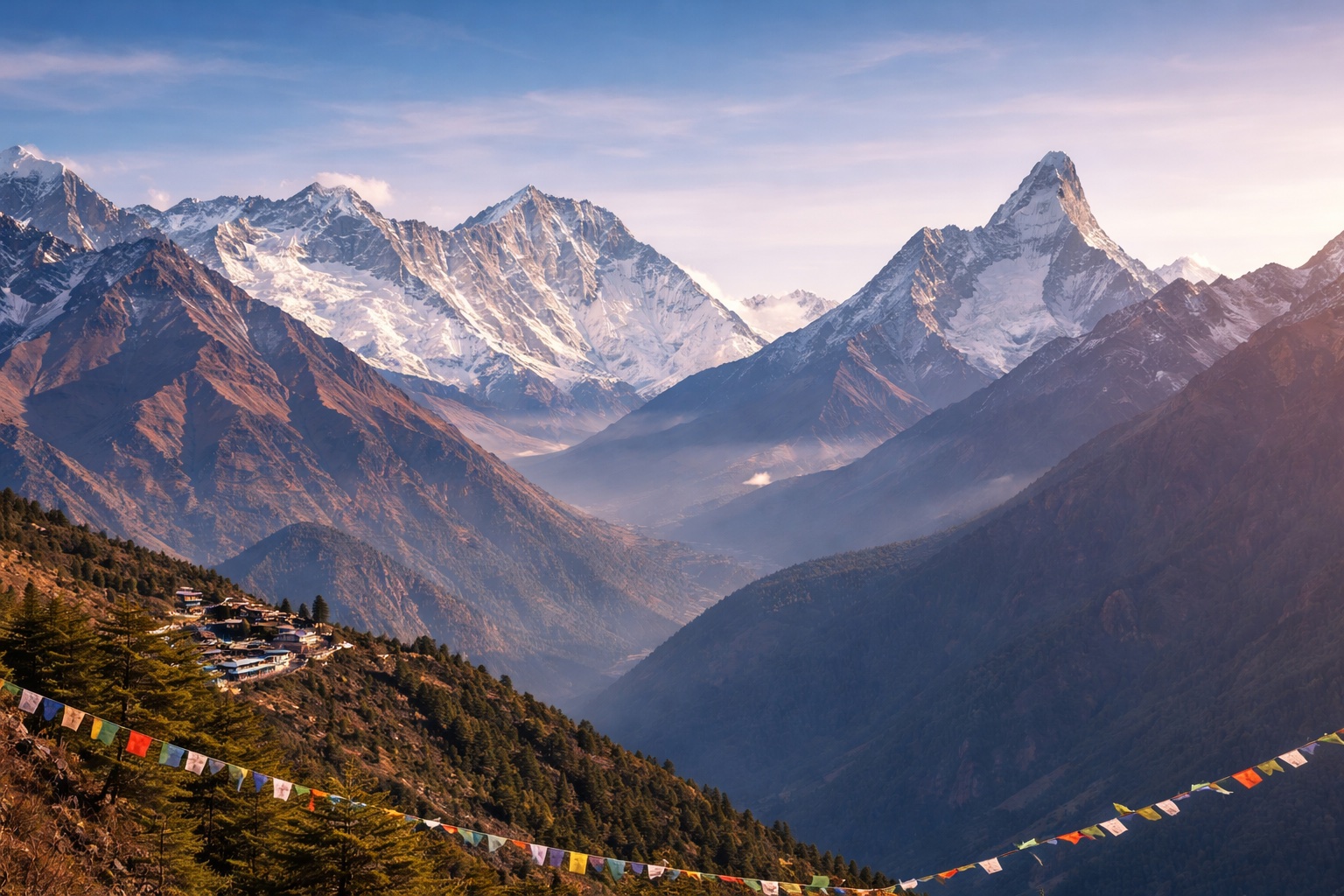
Trek to Gosaikunda (4,380 m) — the most sacred alpine lake in Nepal, a pilgrimage site for hundreds of thousands of Hindus and Buddhists annually. Walk through rhododendron forest and ancient Tamang villages to a glacially carved lake beneath Langtang's snow peaks.
Gosaikunda Lake (4,380 m) is the most sacred body of water in the Himalayas that a trekker can realistically reach without climbing experience. For Hindus, it is the lake created by Lord Shiva's trident when he struck the mountainside to relieve his thirst after consuming cosmic poison during the churning of the ocean — the sacred water of Gosaikunda is believed to flow underground all the way to the Kumbheshwar Temple tank in Patan, 80 kilometres to the south. For Buddhists, the lake is associated with Guru Rinpoche (Padmasambhava) and with the local deity Gosaikunda Baraha. Every year on the full moon of Janai Purnima (August), over 50,000 Hindu pilgrims make the ascent from Dhunche and Syabrubesi to bathe in Gosaikunda's sacred water — the largest high-altitude pilgrimage gathering in Nepal and one of the most remarkable religious spectacles in Asia.
For trekkers, Gosaikunda offers something rare in Nepal trekking: a destination that is simultaneously a genuine Himalayan objective (4,380 m, requiring fitness and altitude awareness), a Buddhist and Hindu pilgrimage site of deep spiritual significance, and a landscape of exceptional natural beauty — the lake itself deep blue in clear weather, ringed by glacial moraines and the snow peaks of Langtang Lirung (7,227 m) and the Jugal Himal rising directly behind it. On a clear morning, the reflection of the Himalayan skyline in Gosaikunda's still surface is one of the most photographed sights in Nepal.
The standard Gosaikunda Trek approaches from Dhunche (1,950 m) in the Rasuwa district — a 4-hour drive from Kathmandu — climbing through the rhododendron and oak forest of Langtang National Park via the tea-house villages of Sing Gompa (3,330 m) and Cholangpati (3,584 m) to the Gosaikunda lake complex. The ascent passes through some of Nepal's finest remaining high-altitude rhododendron forest — magnificent in spring (March–April) when the red, pink, and white blooms create a visual spectacle that makes the walk worth doing in its own right.
The most rewarding version of the trek — included in our itinerary — continues north from Gosaikunda over the Lauribinayak Pass (4,610 m) into the Langtang Valley, descending to Syabrubesi (1,503 m). This crossing adds a high-pass traverse that delivers dramatic views of the entire Langtang range and connects the Gosaikunda pilgrimage route to the Langtang Valley trail — creating a complete circuit that avoids retracing steps and adds the cultural richness of the Tamang villages in the Langtang valley.
Gosaikunda is not a single lake but a chain of sacred lakes at high altitude. The principal lake — Gosaikunda itself — sits at 4,380 m and is approximately 400 metres long. A Hindu shrine on its northern shore is tended by a resident sadhu (holy man) whose year-round presence at this altitude is itself a remarkable demonstration of religious devotion. Above Gosaikunda lie Saraswatikunda and Bhairavkunda, each associated with specific deities and visited by the most devout pilgrims during Janai Purnima. The lake complex feels simultaneously like a geological curiosity (glacially carved basins in bare rock and moraine), a natural sanctuary (snow leopard territory — tracks occasionally seen in winter and spring), and a living religious landscape where the boundary between the physical and spiritual is genuinely ambiguous.
Gosaikunda at 4,380 m is within the altitude range where acute mountain sickness (AMS) becomes a real possibility for inadequately acclimatised trekkers. Our itinerary includes a rest and acclimatisation afternoon at Sing Gompa (3,330 m) before the final ascent — the gradual approach from Dhunche through Sing Gompa and Cholangpati over three days gives most fit adults adequate acclimatisation. The symptoms to watch for above 3,500 m — headache, nausea, fatigue disproportionate to effort — are explained by our guides in detail at the trek briefing. The Lauribinayak Pass (4,610 m) on the descent side requires an early morning departure for safety and to ensure the afternoon descent to Syabrubesi is completed before dark.
The Gosaikunda Trek lies entirely within Langtang National Park — Nepal's third-largest park, established in 1976, protecting a remarkable gradient of habitat from subtropical riverine forest at 1,000 m to glaciated peaks above 7,000 m. The park was severely affected by the April 2015 earthquake, which triggered a massive landslide that buried the village of Langtang town under tens of metres of debris, killing over 200 people. The Gosaikunda route itself was less affected than the main Langtang Valley, and the community-led rebuilding effort has restored the trail infrastructure to full operational condition. Trekking in the park now directly supports the communities that were devastated in 2015 — an important consideration for travellers choosing where their trekking spend makes a difference.
Gosaikunda (4,380 m) is a glacially formed alpine lake in the Langtang National Park buffer zone. According to Hindu mythology, it was created by Lord Shiva's trident and the lake water is believed to flow underground to the Kumbheshwar Temple tank in Patan. For Buddhists it is associated with Guru Rinpoche. Every August at Janai Purnima (full moon), over 50,000 Hindu pilgrims climb to the lake for a sacred bathing ritual — one of Nepal's most extraordinary religious events.
The maximum altitude is 4,610 m at the Lauribinayak Pass. Gosaikunda itself is at 4,380 m. Our itinerary includes a gradual ascent with an acclimatisation afternoon at Sing Gompa (3,330 m) before going higher. This is sufficient for most fit adults. Standard AMS precautions apply — ascend slowly, stay hydrated, descend if symptoms worsen. Our guides carry supplemental oxygen and Diamox.
Yes — and this is our recommended combination. The standard 12-day Gosaikunda + Langtang circuit follows the Langtang Valley to Kyanjin Gompa (3,870 m), then returns to cross the Lauribinayak Pass to Gosaikunda and descend to Dhunche. This is one of the finest combined treks in the Nepal mid-hills. Contact us to build a customised itinerary.
October–November (clearest mountain views, stable weather) and March–May (rhododendron bloom, spring wildflowers). December–February is possible but cold above 3,000 m — the lake itself freezes in winter and the pass can have difficult snow conditions. Monsoon (June–September) brings heavy rain — the pilgrimage season peaks in August but trail conditions are wet and leech-prone.
Two permits: TIMS Card (USD 20) and Langtang National Park Entry Permit (NPR 3,000 / approx. USD 22). Both are included in our package price. No restricted area permit is needed for Gosaikunda.